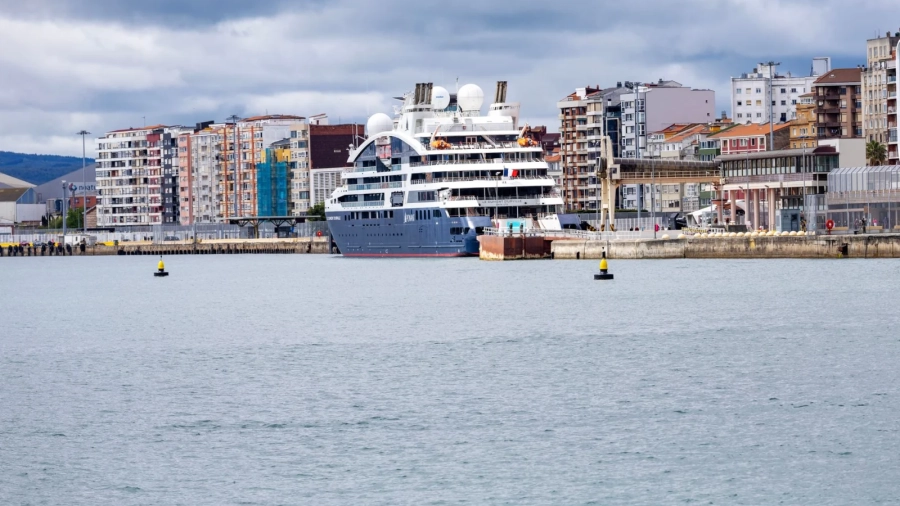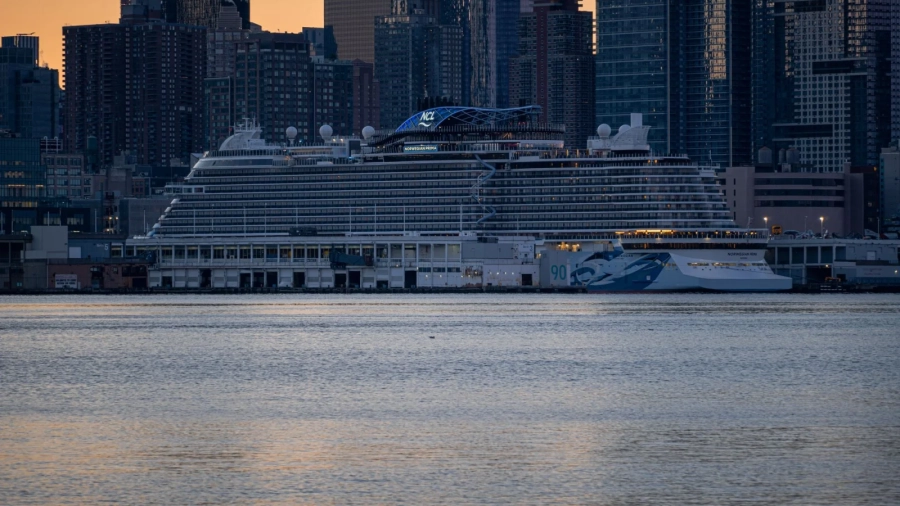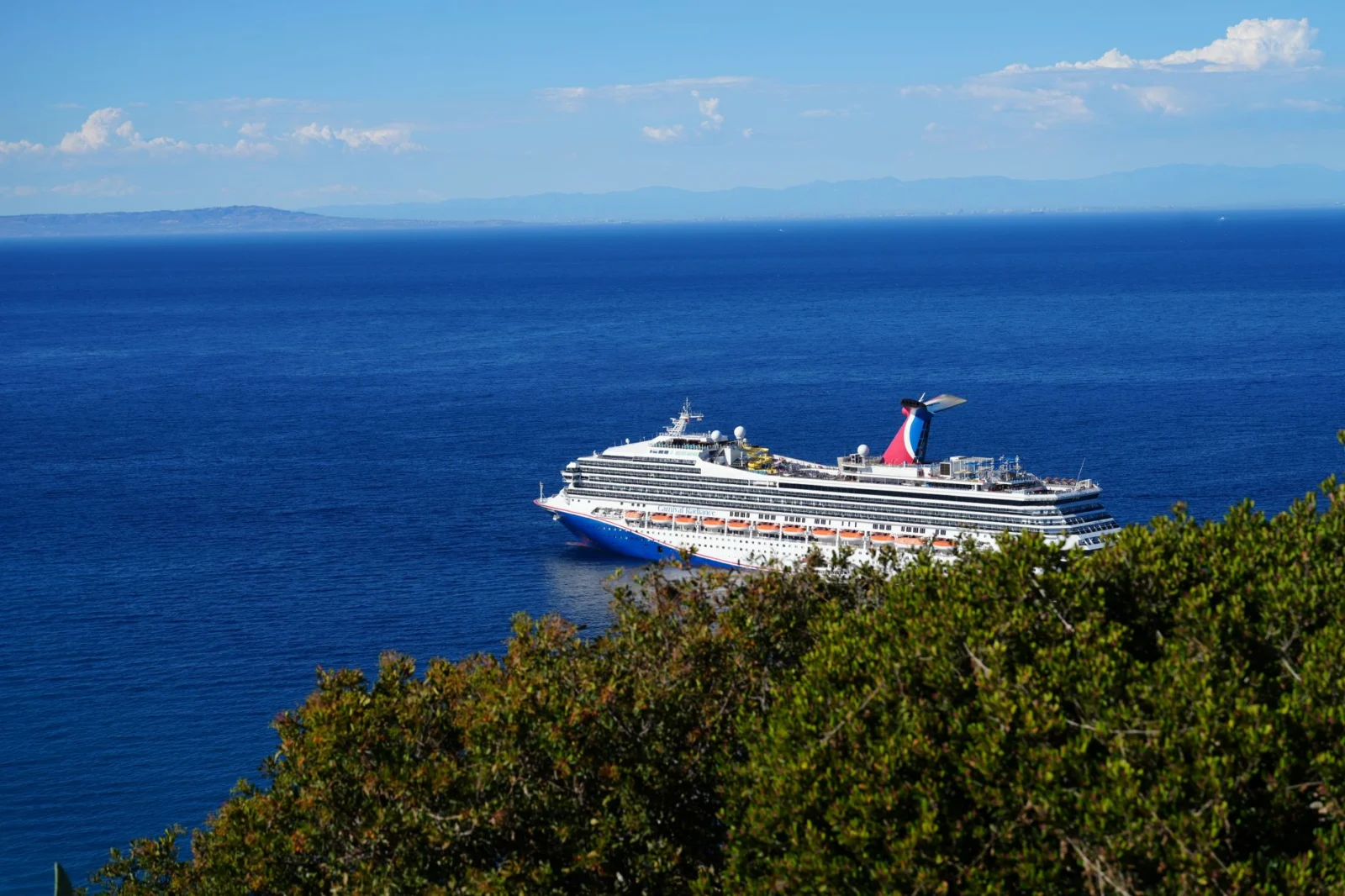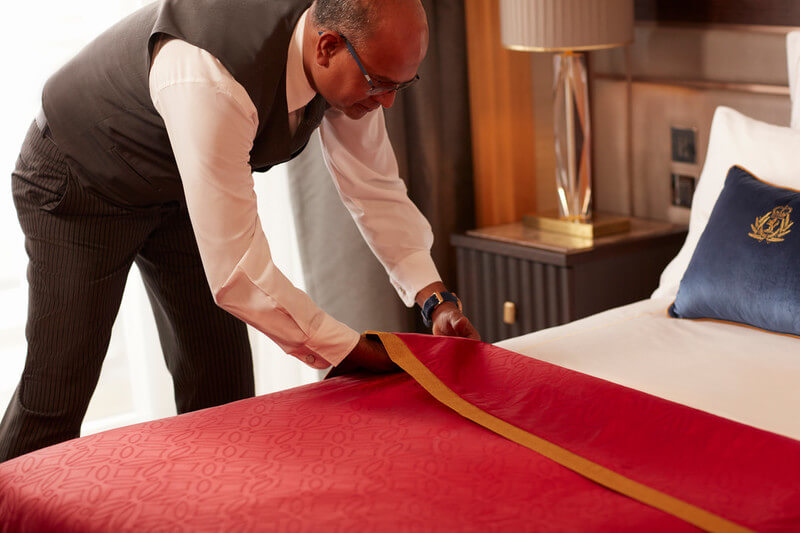
Princess-Cruise-crew.jpg

How Much Extra To Tip Cruise Staff

If you’ve never taken a cruise before, the whole culture around tipping can be a little confusing. Especially if you’re from the UK where tipping regularly is not a part of our culture.

There are two different types of tips on a cruise ship – that which you’re expected to pay, which are referred to as the gratuities, and then extra tips that you may want to give to the people helping you to enjoy your cruise.
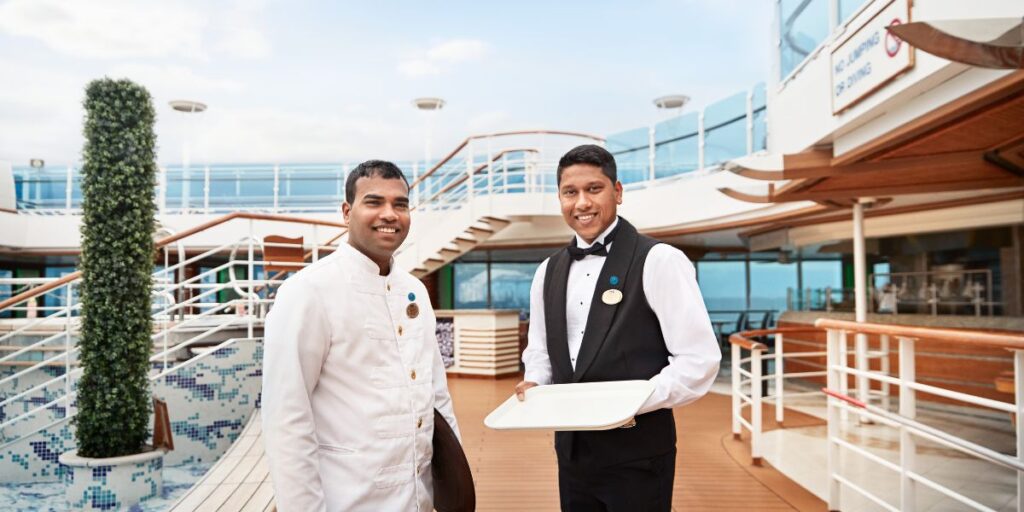
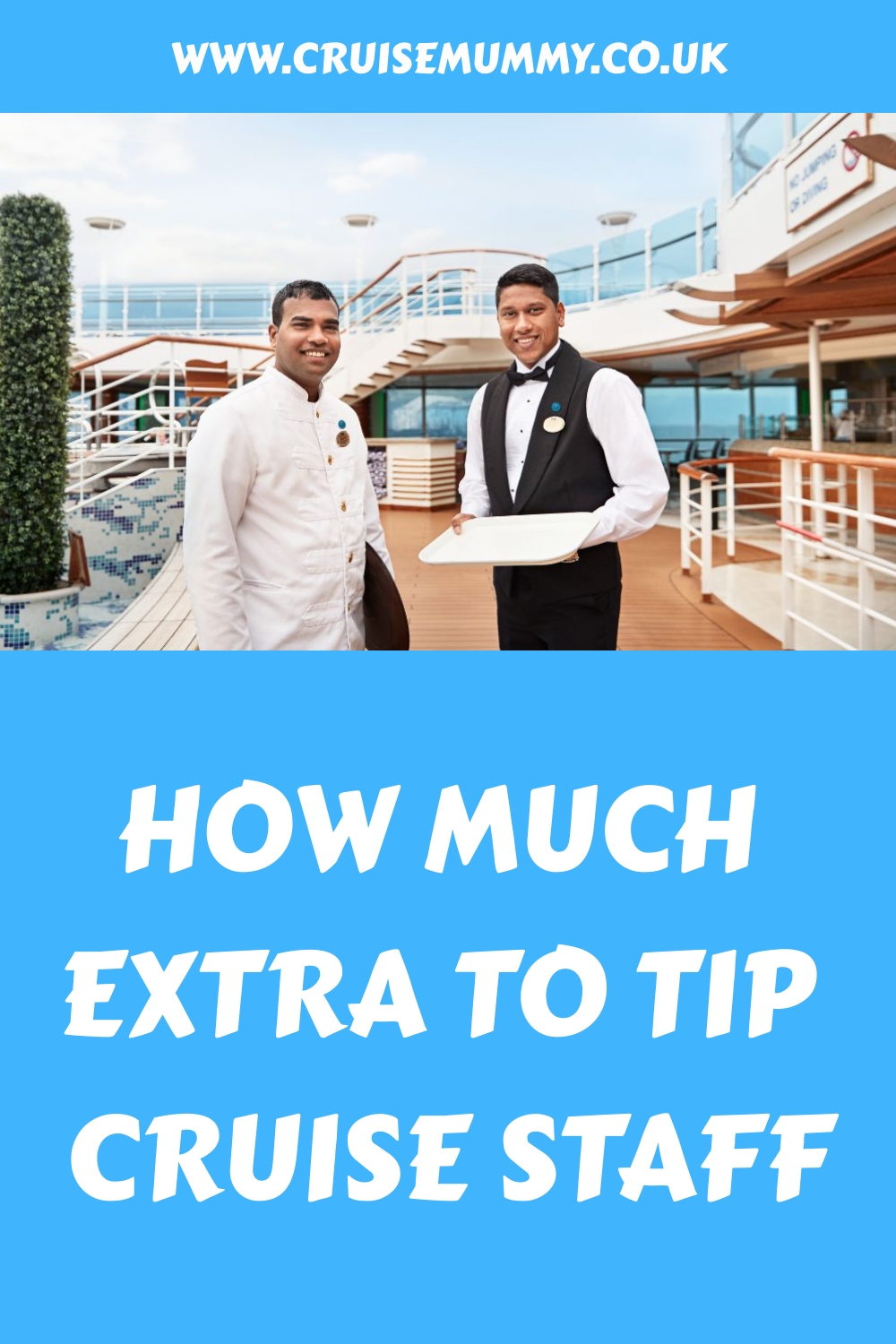
Princess Cruises crew

If you’re a novice with tipping, don’t worry. I’ve spent hours browsing the best cruise forums to find out what other experienced cruisers tip above and beyond the standard gratuities.

I’ve collected a ton of data that will help you to compare yourself to others and find a level that feels right for you. Because at the end of the day, it’s totally up to you how much extra to tip, and whether to tip at all.

So, let’s take a look at how much to tip cruise staff, as a guide.

About Cruise Gratuities

Cruise gratuities are the tips that you are expected to pay during your cruise. They apply to all guests and are divided up between different members of the crew, including housekeeping, your room attendant, and those that work behind the scenes that you otherwise wouldn’t see, and therefore wouldn’t have the chance to tip.
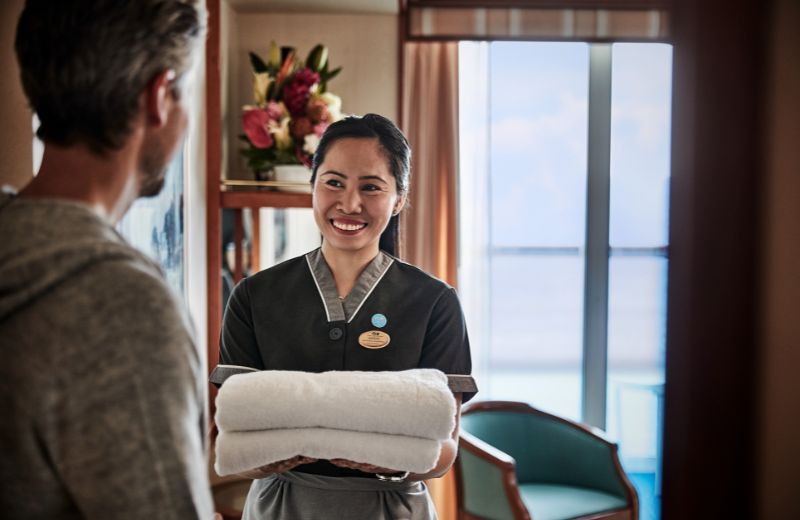
Princess Cruises room attendant

Note that I say you are ‘expected’ to pay these. They’ll be added to your cruise account automatically, and you’ll need to pay them to clear your account, although on most cruise lines you can ask for them to be removed.

But you should be aware that for many cruise lines, including Royal Caribbean, NCL and Carnival, the crewmembers rely on the tips that passengers are expected to pay. People only tend to remove them if they’ve had terrible service, and even on those rare occasions, most passengers still pay them.

Sometimes, your gratuities are already included in your fare. That’s the case with:

  • MSC Cruises (when booked in the UK)
  • P&O Cruises
  • Virgin Voyages
  • Marella Cruises
  • Celestyal Cruises
  • Regent Seven Seas Cruises
  • Silversea

Many other cruise lines let you prepay your gratuities, too. It’s still a separate charge, but this means you can get it paid for upfront, and then you don’t have to worry about it later.

These include:

  • MSC Cruises (when booked in the US)
  • Disney Cruise Line
  • Royal Caribbean
  • Princess Cruises
  • NCL
  • Holland America Line
  • Carnival

There may be some times when you’re asked to pay them upfront. One example is Royal Caribbean’s MyTime Dining plan – if you want the flexibility to eat dinner at a time that suits you, you have to prepay your gratuities.

Otherwise, you’ll have the gratuities added to your account, and you’ll be expected to pay them off at the end, along with any other charges that you’ve accrued during your cruise.

As a rough guide, most cruise lines tend to charge around $15 per person per day for gratuities. It may be slightly more or slightly less. If you book a suite, expect the cost to be closer to $20 per person per day.

MSC butler

Drinks Gratuities

While your normal gratuities cover most staff on the ship, there may be times when you are asked to pay additional gratuities.

One of these is when you order a drinks package, which usually gives you unlimited drinks during the cruise.

While you’ll see an advertised price for your drinks package, some cruise lines – including Royal Caribbean and Princess Cruises – will add on a fixed gratuity fee when you pay, which is usually 18%.

Sometimes, a gratuity is added on to every drink, whether you have a package or not. This really depends on the cruise line and which country your ship departs from. The rules vary a lot, so you’ll need to check the terms and conditions of your booking to be sure.

Bar staff

Spa Gratuities

It’s similar with spa treatments. You’ll see an advertised price for your spa treatment, but many cruise lines will add on an additional gratuity to the price you pay – somewhere between 15% and 20%.

With your regular gratuities, and these additional gratuities for drinks packages and spa treatments, you aren’t expected to tip any extra.
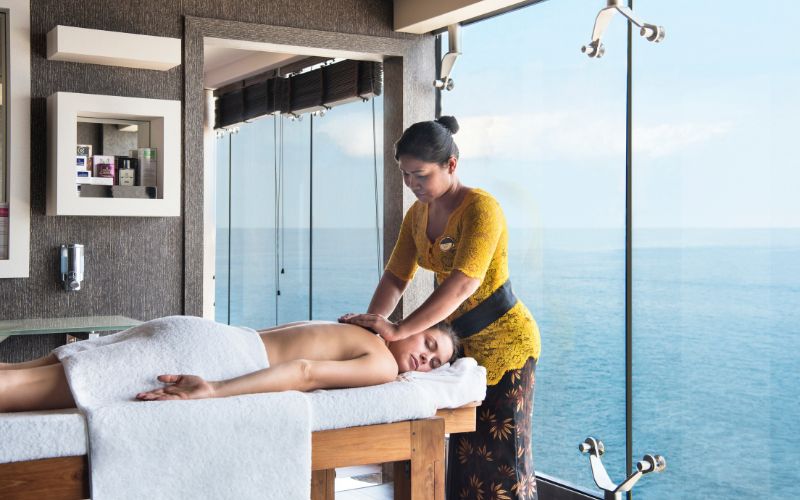
MSC spa staff

Indeed, some cruise lines are very clear that tipping is not expected – especially P&O Cruises, since it’s a British cruise line where tipping culture is not the norm.

Some even discourage it. MSC’s official line from their UK website is: “MSC Cruises does not recommend tipping individual members of staff.”

But on most cruise lines, many passengers do – especially American passengers where tipping is part of the culture. And so if you want to do the same, let’s take a look at average tipping amounts for different crew members…

There is no set amount for how much to tip on a cruise, and once you have paid your gratuities, there’s no need to tip more if you don’t want to. Average extra tips vary, with most cruisers averaging $1-2 for drinks or room service, and $10-20 per day for cabin stewards.

It’s up to you if you decide to tip extra, but your automatic gratuity charge covers all the essentials. Anything extra is just to say thank you to crewmembers for looking after you, or a way to get a slight ‘edge’ in the service they provide.

They can’t go too far above and beyond but if you tip well then crewmembers might be able to offer a few small touches to make your cruise more special, such as serving you quicker at the bar or spending a little more time to create you a special towel animal in your room.

Carnival Cruise bartender

How Much to Tip Your Room Steward

The typical amounts tipped to room stewards varies between around $2 and $20 per day, although it will depend on the length of the cruise. Many people prefer to tip extra at the start of their cruise, to ensure they get the best service for the duration of their sailing.

One of the lower amounts I’ve seen, for those who want to tip extra, is $20 extra at the start of the cruise and then maybe a little more each night. CruisingNewb on the Royal Caribbean Blog forum suggests this was plenty to ensure proactive service.
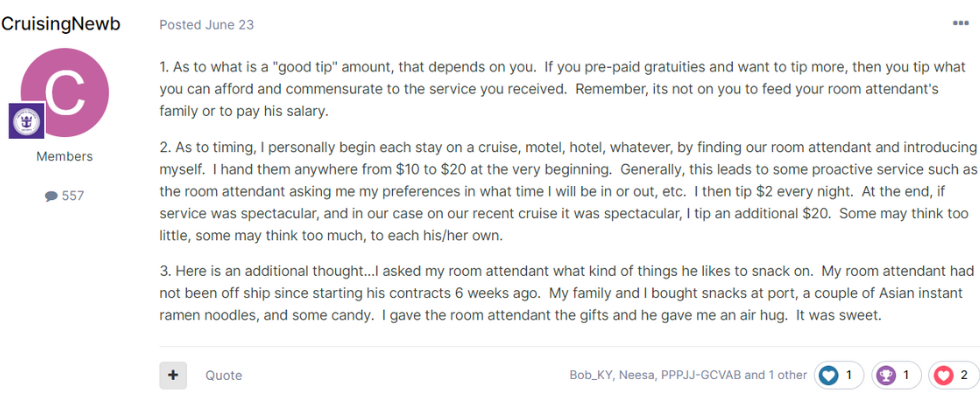
Room steward tip

Many people tip cabin attendants $10 per day, or $50 to 100 as a lump sum either at the start or end of the cruise.

Of course, some people choose not to tip any extra, and are still happy with the service they receive.
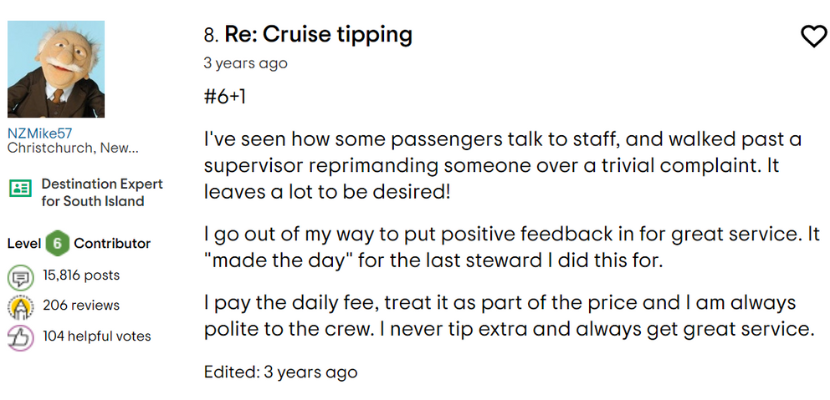
Room steward tip

How Much to Tip Your Waiter

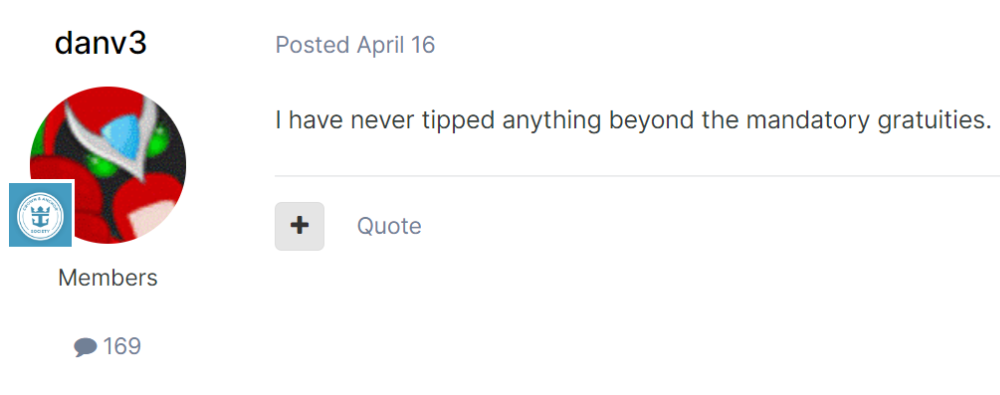
Main Dining Room waiting staff tend to be covered in daily gratuities, but for people who like to tip extra, an average is usually $100 per week. Some people prefer to tip on a per-meal basis, and tend to weight the tips more for dinner – $20 per dinner, $10 for lunch and $5 for breakfast.

Depending on your cruise line and your choice of dining plan, you might get the same waiter every night. You’ll then really notice just how good their service is – they will usually remember you and your preferences, and be able to make dinner feel like a really special occasion each night. That may be something you want to reward.
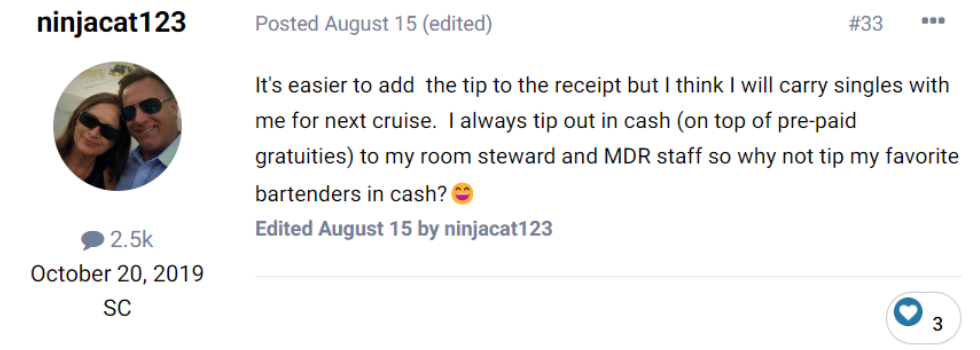
Waiter tip

Source: Royal Caribbean blog

But then, there are plenty of others who view the Main Dining Room staff as already having been tipped as part of the gratuities, and, therefore, won’t tip any more than they need to.
Waiter tip

Nowadays, more and more cruises offer flexible dining, so you will have a different team of waiters every night. When this is the case, people are less likely to tip waiters in cash as they probably won’t see them again during the cruise.

How Much to Tip Your Bartender

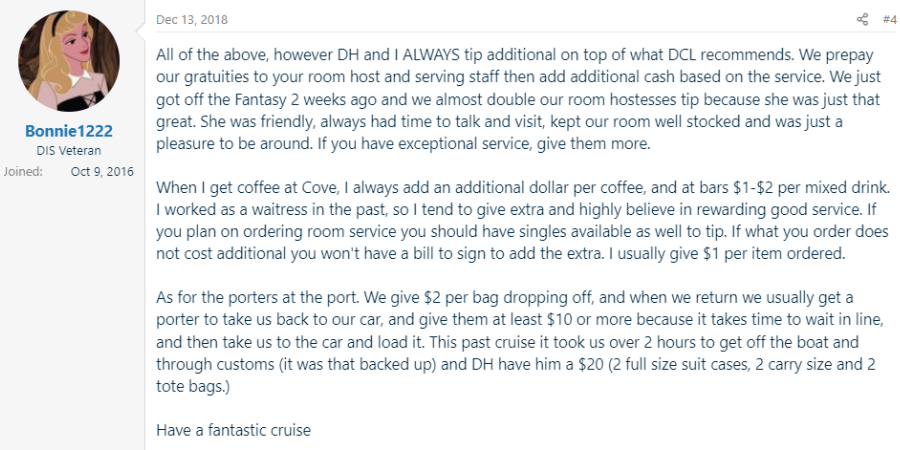
Many cruise passengers will tip their bartender on a per-drink basis, usually $1-2 per drink ordered. Some passengers prefer to tip their bartender a larger one-off amount if they intend to stay at a bar for a little while – up to $20 is seen as normal.

Some cruise ships like Disney and Royal Caribbean will give you a receipt to sign for every drink. Here, you have the option to write on an additional tip amount, which will be charged to your onboard account. This way, you can use any onboard credit that you have accrued to pay for tips. 

Alternatively, you can tip in cash with $1 or $2 bills if you prefer. Of course, pounds sterling, Euros or any other currency will also be welcomed by crew members as they often travel the world and can always change it ashore if needed. Just try not to tip with coins.

Some passengers believe that tipping bartenders extra is a nice thank-you for the busy staff who may be making you complex cocktails. Others see tipping as a way of ensuring they get served first, where possible – hence tipping a $20 bill upfront.
Bartender tip

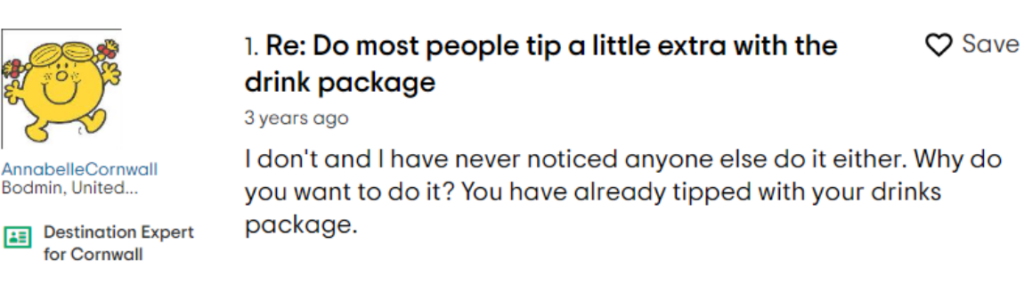
If you’ve paid for a drinks package, you’ll already likely have paid an additional gratuity, and so many people don’t then like to tip again.
Bartender tip

Source: Tripadvisor

How Much to Tip a Cruise Butler

Passengers tend to tip cruise butlers more than other crewmembers because they tend to offer more services and are more hands-on in making your cruise special. $200 to 300 per cruise is average, although some may prefer to tip more.

Butlers tend to be offered on luxury cruise lines, and many of those – including Regent Seven Seas and Silversea – have tips already included, which are designed to cover the butler. But that doesn’t stop people from tipping extra.

Butlers are also used in suites on some other cruise lines, including Celebrity Cruises and P&O Cruises. Royal Caribbean has ‘Royal Genies’ instead of butlers, and there is specific advice given that they are not included in typical cruise gratuities, so any tipping needs to be offered separately.

Royal Genie

Read more: How much to tip a Royal Genie

How Much to Tip for Room Service

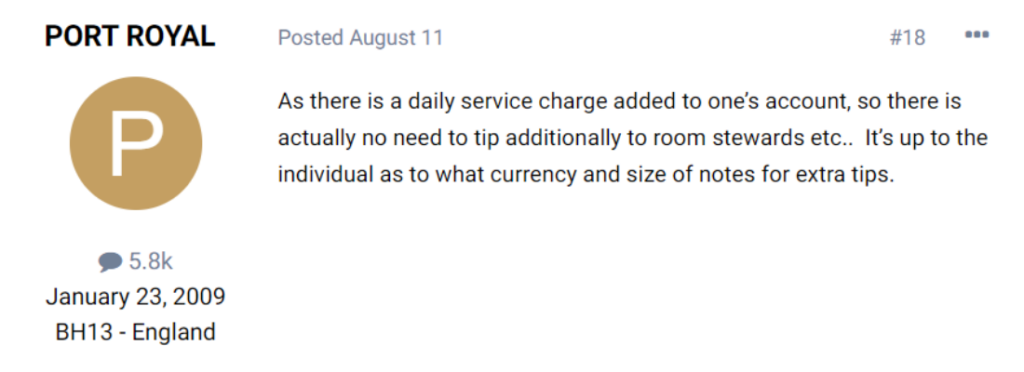
Most people tend to tip $1-2 per item ordered from the room service menu, or a $5 total for a meal or a larger order. Many people only order small items for room service, and so don’t tend to tip large sums because the cost of what they are ordering is already low.

Again though, this is a personal decision and can vary. You might feel that room service is more effort for the crew, since they aren’t just pouring you a drink at a bar where they’re working, but they’re delivering it all the way to your stateroom.

Or you might take the view that you’ve paid your daily gratuities, and this service is included as part of that.
Room service tip

Source: Cruise Critic 

How Much to Tip Your Porter at the Cruise Terminal

Most people offer a small tip to the baggage handlers at the cruise terminal, to ensure their bags are looked after as they are taken onto the ship. It normally varies between $2 and $5 per bag, although a total tip of $10 for a family’s luggage would be sufficient.

Again, there’s no need to tip your porter, but bear in mind how much luggage they are carrying onto the ship. It’s a nice way to thank them for not having to drag your suitcases around with you all day.
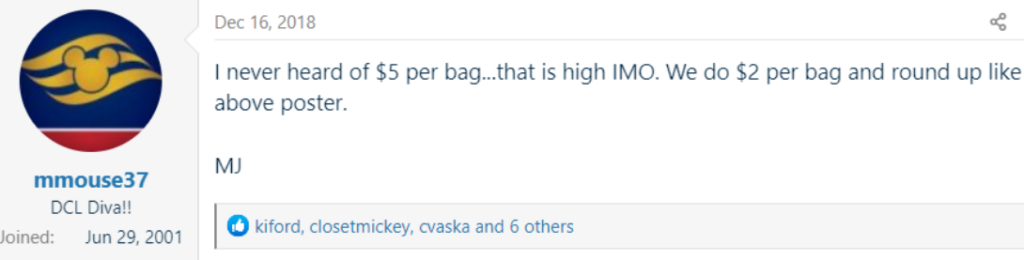
Porter at the cruise terminal tip

Source: Disboards 

How Much to Tip on Cruise Excursions

When on a cruise excursion, it’s normal to tip the guide to thank them for their efforts in showing you around – this can vary from $5 per person up to $30 per person for longer tours. If your excursion has a coach or taxi, a tip of $1 per person is more in line with the average.

Tipping your guide or driver won’t tend to get you better service, and so it’s normally done at the end of the day more as a thank-you.
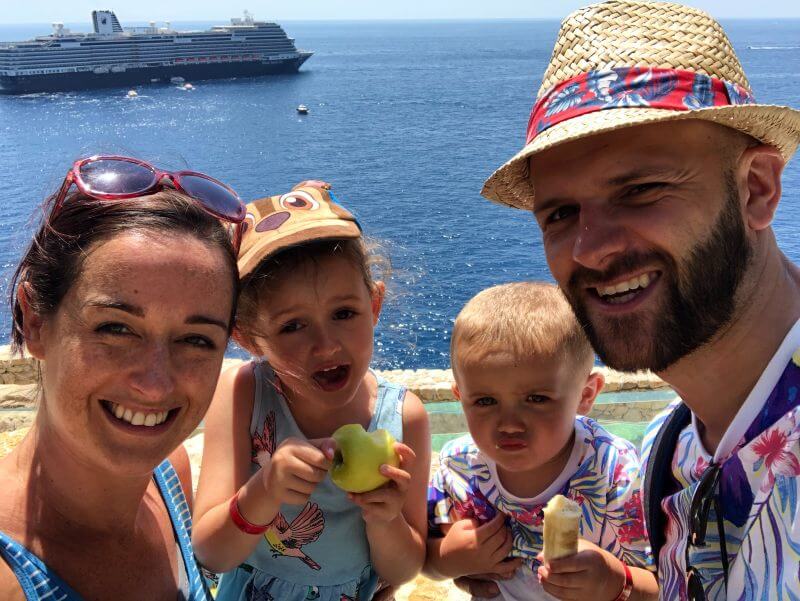
Shore excursion in Monaco

What Currency To Use for Tips

Most people tend to tip in the same currency used on the ship, but generally, it doesn’t matter. You can tip in your own currency if you prefer – crew tend to be grateful for all their tips, and they can bank them all regardless.

The only difference would be on an excursion, where it’s best to either tip in the local currency, or in US dollars, which are accepted more widely.

Shore excursions manager

The Bottom Line

If you’re travelling from the UK, you’ll know that tipping isn’t always something that we’re used to. And you might feel awkward tipping on a cruise when you’ve already paid your gratuities. That’s absolutely fine – there is no obligation at all, and you’ll still get great service.

But you might feel equally awkward travelling on a cruise where you know that tipping a little extra is the done thing, and so you might want to take some extra money with you for tips. Don’t tip more than you’re comfortable doing though – you don’t want to stress yourself out budgeting for tips when you have covered the gratuities already.

If you found this interesting, please share!

Cruise Mummy

Jenni Fielding is the founder of Cruise Mummy. She has worked in the cruise industry since 2015 and has taken over 30 cruises. Now, she helps over 1 million people per month to plan their perfect cruise holidays.


Read more about me

Source link

Cruise ship balcony cabin with sea view, the kind of room many guests aim for with a cruise cabin upgrade

Cruise Cabin Upgrade Guide: How to Upgrade After Booking (2026)

Yes, you can upgrade your cruise cabin after booking. The most reliable route is to call the cruise line or your travel agent and pay the fare difference for a better cabin before final payment. Closer to sailing, most big lines also run bid programs (RoyalUp, Celebrity MoveUp, NCL Upgrade Advantage, MSC UpGrade, Princess Upgrade, Cunard Upgrade) where you offer what you’re willing to pay. Free upgrades do happen, but they’re rare, so don’t count on one.

This guide covers every realistic cruise cabin upgrade route: what each one costs, when it happens, what you give up (usually your choice of cabin number), and how the major lines compare in 2026.

Can You Upgrade a Cruise Cabin After Booking?

Almost always, yes. A cruise booking isn’t locked to one cabin category. Moving up a category is the easiest change to make, because the line gets more money and frees up a cheaper cabin to sell again. Moving down is harder and often isn’t allowed on non-refundable deposit fares.

There are five main ways to upgrade your cruise cabin after booking:

  1. Pay the difference through the cruise line or your travel agent.
  2. Bid through the line’s upgrade auction program.
  3. Book a guarantee cabin and hope the line assigns you something better.
  4. Use loyalty status to get upgrade offers or better odds.
  5. Ask onboard at guest services once you’ve sailed.

If you’re still deciding whether the jump is worth it at all, our guide to the pros and cons of a balcony vs an inside cabin sets out what you actually get for the extra money.

How to Upgrade Your Cruise Cabin Before You Sail

Pay the fare difference

This is the only route where you choose the exact cabin. Call the line or your agent (or use “Manage Booking” online, where some lines allow it), pick the new category and cabin number, and pay the difference between your current fare and today’s price for the new cabin. The cost depends on current pricing, not the price when you booked, so an upgrade can be cheap on a sailing that isn’t selling well and expensive on one that’s nearly full.

Watch for price drops

If the fare for your sailing falls before final payment, many lines and agents will reprice your booking. Some guests take that saving and put it toward a higher category instead, so they end up in a balcony for roughly what they first paid for an ocean view. Policies differ by line and by fare type, and promotions can change when you reprice, so ask your agent to compare the whole package (fare, onboard credit, drinks or Wi-Fi perks) before switching.

Know your fare rules

  • Non-refundable deposit fares usually let you move up a category but not down, and change fees may apply.
  • After final payment, changes are still possible, but any cancellation penalties tied to the original booking may carry over.
  • Promotional perks such as included drinks or onboard credit can change when you switch category. Check before you confirm.
  • Gratuities are often higher in suites, so factor that in.
Spacious suite with a sofa and large windows overlooking the sea
A suite upgrade usually brings more space and extra perks, but also higher gratuities. Photo: Abdou HILALI STUDIO on Pexels

Cruise Upgrade Bid Programs: How They Work

Upgrade bidding is now standard on most big-ship lines. The process is broadly the same everywhere:

  1. After you’ve booked (and usually paid in full), the line emails an invitation, or you check eligibility on its upgrade page or app. You normally need to be opted in to marketing emails.
  2. You choose one or more higher categories and enter a per-person offer above the minimum shown.
  3. You give a credit card, but it isn’t charged unless the line accepts your offer.
  4. If your bid wins, you’re moved automatically and charged. Accepted upgrades are almost always non-refundable.
  5. If it loses, you keep your original cabin and pay nothing.

The important catch: you can’t choose your cabin number. The line puts you in whatever cabin is left in the new category. That could be a lower deck, a cabin under a noisy venue, a partly obstructed balcony, or one far from the rest of your group. Connecting cabins and adjoining rooms for families are usually not kept together.

Cruise upgrade bid programs compared (2026)

Cruise line Program When bids are decided Payment Choose cabin number?
Royal Caribbean RoyalUp Can be accepted up to about 2 days before sailing Card charged only if you win; non-refundable No
Celebrity Cruises MoveUp Eligible within 90 days of departure; accepted up to 2 days before Charged on acceptance; non-refundable No
Norwegian Cruise Line Upgrade Advantage By invitation; can be accepted up to sailing day Charged on acceptance (or to onboard account on sailing day) No
MSC Cruises MSC UpGrade Any time up to departure Charged automatically if accepted; higher service charge billed onboard No
Princess Cruises Princess Upgrade Opens 85 days out (115 days for 25+ night voyages) You pay after acceptance via Manage Booking or your agent No
Cunard Cunard Upgrade Opens 80 days out; final offers 7 days before Charged on acceptance; payment due within 72 hours No
Virgin Voyages Level Upgrade Most responses around 48 hours before sailing Check current terms No
Carnival No bid program Occasional paid upgrade offers; ask your agent or guest services Fare difference Yes, if you pay the difference

Terms above are based on each line’s published rules at the time of writing. They change, so read the terms on your invitation before you bid.

Tips for winning a cruise upgrade bid

  • Bid a little above the minimum. Lines generally take the highest offers first, and minimum bids often lose on busy sailings.
  • Compare with the fare difference. Look up the current price of the cabin you’re bidding on. If paying the difference costs about the same as a strong bid, pay it and choose your cabin.
  • Bid on more than one category where allowed. You’ll only be charged for one upgrade.
  • Think about quieter sailings. Shoulder season and repositioning cruises have more empty upper cabins, so bids are more likely to win.
  • Check what’s included. On some lines a suite upgrade brings lounge and restaurant access; on others the perks are limited. Celebrity, for example, awards Captain’s Club points on your originally booked category, and RoyalUp suite upgrades don’t earn the double Crown & Anchor points you’d get by booking a suite.

For a closer look at what changes as you move up, see suite vs mini-suite vs balcony.

Guarantee Cabins and Free Upgrades

A guarantee (GTY) booking means you pay for a category, or “at least” a category, and the line assigns your cabin number later, often in the final weeks before sailing. Guarantee fares are usually a little cheaper than picking your own cabin.

Because the line can place you anywhere in that category or higher, guarantee cabins are where most genuinely free upgrades happen. When a lower category is overbooked, the line moves some guests up to free space. You can’t ask for this, and many guarantee guests simply get an ordinary cabin in the category they paid for, sometimes in a less desirable spot.

Guarantee cabins suit flexible travelers who don’t mind where they sleep. Skip them if you need a specific location, such as midship for seasickness, an accessible cabin, or cabins close to family.

Friendly hotel reception desk with staff helping a guest at check-in
Guest services is the place to ask about last-minute cabin upgrades once you're onboard. Photo: AS Photography on Pexels

Loyalty Perks and Cabin Upgrades

Loyalty status rarely gives you a guaranteed free upgrade, but it can help in other ways:

  • Some lines give top-tier members first look at upgrade offers or better pricing.
  • When lines do hand out complimentary upgrades to fill a ship, frequent guests and those who booked higher fares tend to be considered first.
  • Higher tiers may include suite-style perks (priority boarding, lounge access, laundry) without changing your cabin.

The most useful tiers sit at the top of each program, such as Royal Caribbean’s Diamond Plus and Pinnacle Club, Celebrity’s Elite and Elite Plus, and Princess Captain’s Circle Platinum and Elite. Compare them in our guide to cruise line loyalty programs compared.

Upgrading Onboard at Guest Services

If cabins are still empty after embarkation, the line would rather sell them than sail with them empty. Head to guest services (or check the app) on embarkation day and ask whether any upgrades are available and at what price. You’ll normally pay a pro-rated amount for the nights left, charged to your onboard account.

Onboard upgrades aren’t advertised on most ships, availability is unpredictable, and the busiest sailings rarely have spare cabins. Ask early on the first day, be polite, and be ready to move your luggage yourself or wait for your cabin steward to help.

What Happens to Your Cabin Number When You Upgrade?

  • Paying the difference: you pick the new cabin, so you control the location.
  • Winning a bid: the line assigns the cabin. You lose your original cabin, and you usually can’t switch back once the upgrade is accepted.
  • Guarantee bookings: the cabin number appears in your booking once assigned. Check your app or documents in the final few weeks.
  • Onboard upgrades: you’ll be offered whatever is free, sometimes with a choice of two or three cabins.

Your new key card or medallion is reissued for the new cabin, and your dining time, drinks package and other add-ons normally stay with your booking. Check with the line if you’re moving into a suite category with its own restaurant or lounge.

Is a Cruise Cabin Upgrade Worth It?

An upgrade is usually worth it when:

  • You’re on a scenic itinerary (Alaska, Norway, the Mediterranean) where a balcony gets heavy use.
  • The cruise is long. An extra $40 per person per night matters less across 14 nights than it does on a weekend sailing.
  • The suite category includes real extras, such as a private restaurant, lounge, or included drinks.

It may not be worth it on short, port-heavy cruises where you’ll barely be in your cabin. In that case, the money often goes further on excursions, specialty dining, or a future cruise.

FAQs

Can you get upgraded on a cruise for free?

Yes, but it’s uncommon. Free upgrades mostly go to guarantee-cabin guests when a lower category is overbooked, and sometimes to loyal or higher-fare guests. Carnival has said publicly that the chances of a free move from inside to balcony are slim.

How do I upgrade my cabin on Princess Cruises?

You can pay the fare difference through Princess or your travel advisor, or bid through Princess Upgrade. Bidding opens 85 days before sailing (115 days for voyages of 25 nights or more), and your booking must be paid in full.

Do you get charged if your cruise upgrade bid isn’t accepted?

No. On RoyalUp, MoveUp, Upgrade Advantage, MSC UpGrade and similar programs, your card is only charged if the line accepts your offer. If it’s declined, you keep your original cabin at no cost.

Can you choose your cabin number when you bid for an upgrade?

No. Bid programs only upgrade the category, and the line assigns the cabin. If location matters, pay the fare difference and choose the cabin yourself.

When is the best time to upgrade a cruise cabin?

Before final payment is often best, because you can reprice if fares drop and choose your cabin. Bid programs open roughly 2 to 3 months before sailing and are usually decided in the last few days.

coach-to-southampton-1-1.jpg

Getting a Coach to Southampton Cruise Terminal

I regularly travel by coach when I take cruises from Southampton. When I lived in the north of England, it was always the cheapest option. Even now that I live further south, it’s still a great balance of value and time.

I have driven and flown to Southampton Cruise Terminal before, and there’s also the option of trains. But usually, taking a coach is the best way to get to Southampton for a cruise.

In this guide, I’ll show you all of the coach companies you should look at for the journey across the UK to your cruise ship.

A coach on the way to Southampton.

Intercruises offers a coach transfer service called Cruise Connect for passengers who are cruising with Cunard, P&O Cruises, Princess Cruises or Marella.

This service will take you from a local pick-up point all the way to the ship. There are 53 Cruise Connect pick up points available, so you should have one close by. Your luggage is taken care of too. When you arrive at the coach, you won’t see your bags again until they are delivered to your cabin on the ship.

In more than 20 years that Intercruises has been operating Cruise Connect coaches, they’ve never missed a sailing. The coach only contains cruise passengers, so if there’s ever a delay then the ship will wait.

Children aged 3 to 12 travel for a reduced fare on Intercruise coaches, and under-3s go free. Car seats are advised, but not necessary.

You won’t often find children on board, so the friendly drivers usually make a fuss of them. On our last journey to Southampton, we even got to watch Moana on the onboard TV. And I must say, the over-60s loved it!

When you book a P&O Cruise, you may be given the option to have free coach travel or car parking at the terminal. The P&O coach travel to Southampton will be provided by Intercruises. Even if you don’t have this option, or if you choose a Saver Fare with no free coach, you can still book the Intercruise coach yourself directly through their website.

  • Cruise lines: Cunard, P&O Cruises, Princess Cruises, Marella
  • Pick up points: 53
  • Drop off: At the ship
  • Wheelchair access: Yes
An Eavesway Coach.

Eavesway Travel offers a coach service to Southampton, Dover and Newcastle for passengers travelling with Celebrity Cruises, Fred.Olsen, P&O Cruises, Princess Cruises and Royal Caribbean.

The coach service is only available for cruises of five nights or more. Coaches depart from stops across the North of England, Midlands and South Wales.

The company dates back to 1931, and has been offering coaches to Southampton Cruise Terminal since the 1990s. The coaches are very luxurious with leather seats and free Wi-Fi.

The Cruiselink coaches only carry cruise passengers, so you can be sure that you won’t miss the ship. Your luggage will be taken care of too, so you won’t need to carry it yourself.

Parents should note that on Eavesway coaches to Southampton, a car seat or booster seat is compulsory for kids aged under 12 or less than 135cm tall. My kids use the BubbleBum inflatable booster seat when we travel. There are no reduced prices for children – they will pay the full adult fare.

  • Cruise lines: Celebrity Cruises, Fred.Olsen, P&O Cruises, Princess Cruises, Royal Caribbean
  • Pick up points: Around 30
  • Drop off: At the ship
  • Wheelchair access: Yes
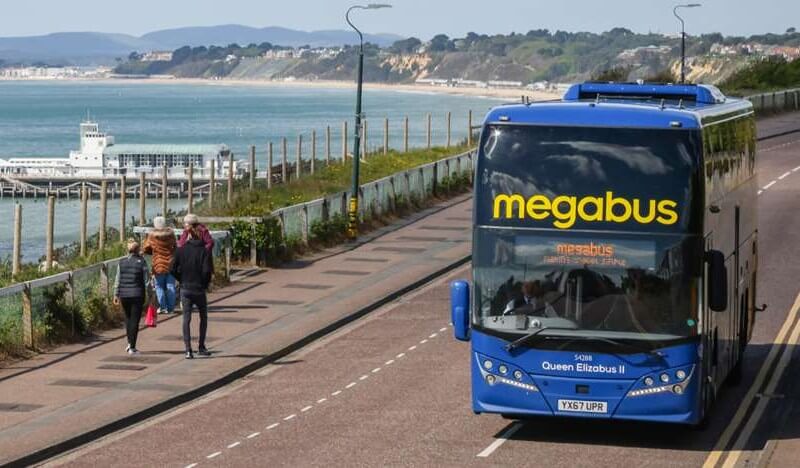
A Megabus coach travlling along a seaside road.

The cheapest way to get to Southampton is the Megabus. I’ve used this service to travel from Manchester to Southampton for as little as £12. I also like to use Tesco Clubcard vouchers to get the coach tickets for free!

The Megabus will drop you off in Southampton City Centre, just over a mile from the Cruise Terminal. It is possible to walk, but with luggage it’s easier to get a taxi or Uber.

When taking the Megabus, it’s best to travel the day before your cruise in case there are delays. Staying overnight in a hotel in Southampton will reduce the stress of travel, and give you time to relax before your cruise.

Children aged 4 to 14 get a 10% discount and under-4s travel free, although they aren’t guaranteed a seat.

  • Cruise lines: All
  • Pick up points: 16 direct + 90 indirect
  • Drop off: Southampton City Centre (East Park Terrace Stop IC)
  • Wheelchair access: Yes
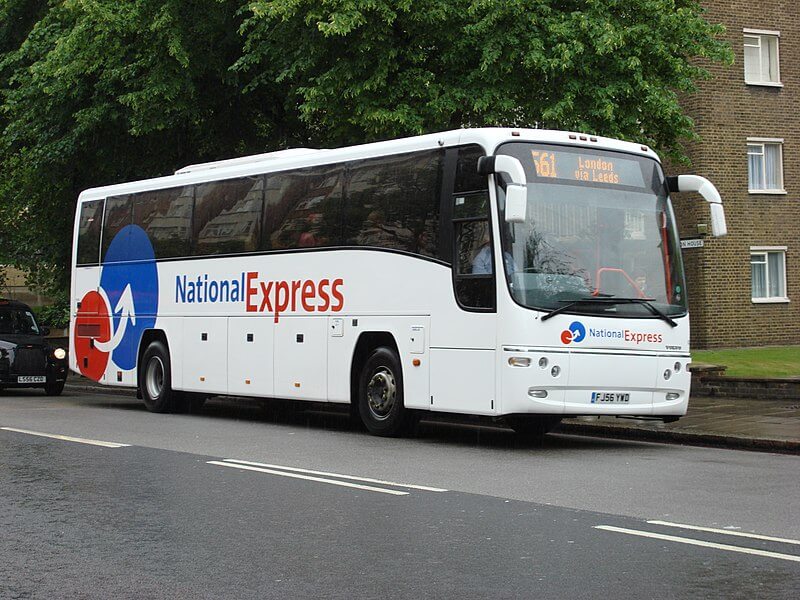
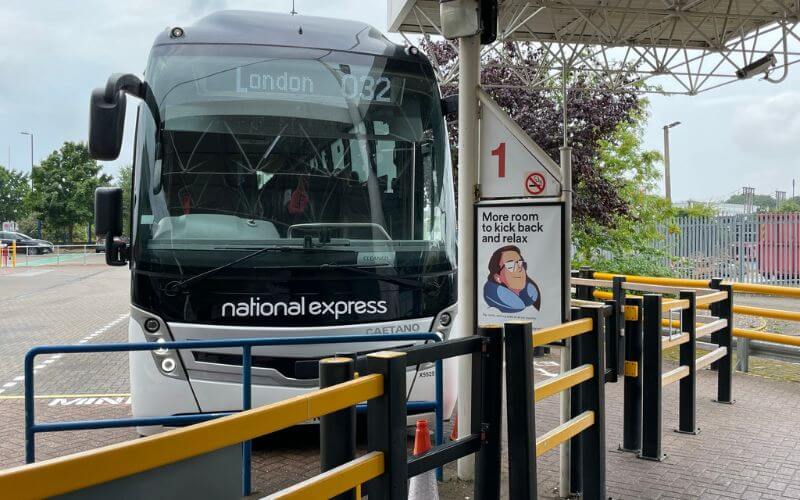
A National Express coach.

National Express is the UK’s largest coach company. The coaches are comfortable, with lots of legroom and free Wi-Fi. They usually don’t cost much more than the Megabus if you book early enough.

National Express Coaches stop at Southampton Coach Station, which is just over one mile from the Cruise Terminal. You can walk, but most people find it easier to take a taxi or Uber.

If you take the National Express to Southampton for a cruise, it’s a good idea to travel the day before in case of delays. This is particularly true if you have to take more than one coach, because if the first coach is delayed you may miss your second one.

National Express doesn’t offer discounts for children. Children aged 3 and up are charged the full adult fare. Children aged under 3 travel for free, and you can book a free ticket to ensure that they have a seat.

  • Cruise lines: All
  • Pick up points: 26 direct + 400 indirect
  • Drop off: Southampton Coach Station (Harbour Parade)
  • Wheelchair access: Yes
Two Amore Cruise Connection coaches.

Amore Cruise Connection is a family-run company that specialises in coach transfers from Scotland to Southampton cruise terminal.

The company has agreements with Royal Caribbean, Celebrity Cruises and MSC Cruises to drive right up to Southampton terminal. So you won’t even need to haul around your luggage – it’ll be collected as soon as you get off the coach.

The coaches pick up at Glasgow Buchanan Bus Station, and then carry on to further pick-ups at Bothwell Services and Gretna Services. For cruise guests in England who are north of Preston, you can get picked up from the Premier Inn in Lancaster. From there, they head directly to Southampton.

Although the company is relatively new, members of the family have been involved in bus and coach travel for over 30 years, so you’re in experienced hands. And while Amore does offer other group coach travel, it was primarily founded for cruise connections, thanks to the family’s passion for cruising.

A £20 discount is available on return fares for under-16s, and wheelchair travel is available.

  • Cruise lines: Royal Caribbean, Celebrity Cruises, MSC Cruises
  • Pick up points: Paisley (Abercorn Street), Glasgow Buchanan Bus Station, Bothwell Services, Gretna Services, Lancaster Premier Inn
  • Drop off: At the ship
  • Wheelchair access: Yes

Omio is a price comparison site for coaches, trains and flights. Although a coach is often the best way to get to Southampton, it can sometimes be cheaper and faster to take the train or even to fly.

I find that it’s worth checking on Omio before booking. The website will quickly show you all of your travel options, so that you can be sure to book what’s best for you.

It doesn’t check all of the coach services, so you’ll still need to look at those individually. But it can help you spot any good value train or plane tickets that you might not have considered.

A view of a cruise ship docked at port  from inside a coach.
Only Intercruises, Eavesway and Amore will take you straight to the ship

Popular Coach Routes to Southampton

Here’s some information about how to get to Southampton by coach from some of the main cities in the UK.

Coach from Glasgow to Southampton Cruise Terminal

Coaches from Glasgow to Southampton with Intercruises Cruise Connect or Amore depart at around 3.30am, with a journey time of around ten hours. This will take you straight to your cruise ship in time for check-in. It’s only available for guests cruising with Celebrity Cruises, Cunard, MSC Cruises, P&O Cruises, Princess Cruises and Royal Caribbean (depending on which company you use).

Alternatively, you can take the overnight National Express Service from Glasgow to Southampton. You’ll need to change coaches at Birmingham or London, and the total journey time is 12 to 14 hours.

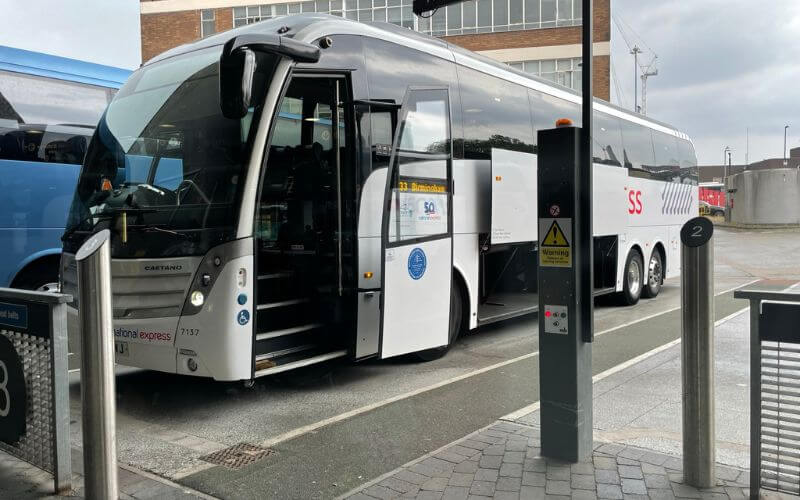
A National Express coach at Southampton coach station.

Coach from Liverpool to Southampton Cruise Terminal

You can take a coach from Liverpool to Southampton Cruise Terminal with Eavesway or Intercruises. The pick-up time is approximately 7am, and you’ll be taken straight to your cruise ship.

Alternatively, you can take the National Express coach the day before your cruise. The journey takes eight to ten hours, and you’ll need to change coaches at Birmingham or London.

Coach from London to Southampton Cruise Terminal

Intercruises Cruise Connect offers a coach service from London Victoria and London Heathrow to Southampton Cruise Terminal. This is only available for those cruising with Cunard, P&O Cruises or Princess Cruises.

There are also National Express coach services from London Victoria and Hammersmith to Southampton Coach Station. Direct coaches take around two and a half hours.

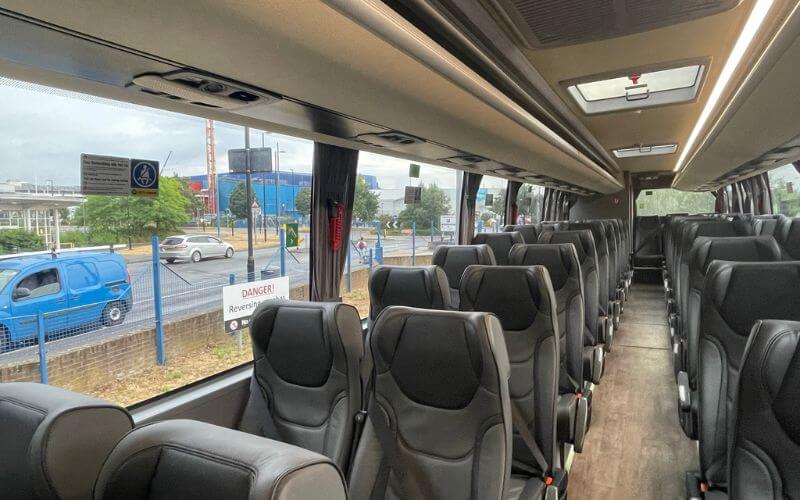
Inside of National Express coach.

Coach from Manchester to Southampton Cruise Terminal

There is no direct coach from Manchester to Southampton Cruise Terminal. Intercruises Cruise Connect and Eavesway Travel both offer a service from Knutsford Services to Southampton Cruise Port, with a pick-up time of around 8am and a journey time of approximately five hours.

Megabus offers a direct coach from Manchester Coach Station to Southampton Coach Station, with a journey time of six to seven hours.

You can also take the National Express from Manchester to Southampton. This requires changing at London or Birmingham and the total journey time is eight to 11 hours.

National Express coach from Southampton to London.

Coach from Birmingham to Southampton Cruise Terminal

Intercruises Cruise Connect and Eavesway Travel both offer coach travel from Birmingham to Southampton Cruise Port. The pick-up time from Hilton Park Services in North Birmingham is around 9.15am, or from Hopwood Park Services in South Birmingham is around 10.15am. The journey takes three to four hours.

There’s a Megabus service from Birmingham Brunel Street to Southampton City Centre that takes between three and a half and four hours. Due to the timings, you would need to take the coach the day before your cruise.

You can also take the National Express from Birmingham Coach Station to Southampton Coach Station. Direct journeys take three and a half to four and a half hours.

Coach from Leeds to Southampton Cruise Terminal

Intercruises Cruise Connect and Eavesway Travel both offer coach travel from Leeds Coach Station to Southampton Cruise Terminal. Pick up is at around 6.30am, and you will be taken straight to your cruise ship.

Alternatively, you can take the National Express from Leeds to Southampton. There are no direct routes, so you’ll need to travel the day before or overnight and change to London. The journey takes seven to 12 hours.

Cruise passengers inside a coach.

Prices vary – but there’s always a cheap option!

You may be able to get free coach travel to Southampton as part of your cruise booking with P&O Cruises, Princess Cruises or Cunard. You can also travel on the Megabus for free in exchange for Tesco Clubcard vouchers.

The Megabus is the cheapest coach to Southampton. It can cost as little as £12 per person for a single ticket.

A return coach ticket to Southampton with InterCruises, Eavesway or Amore can cost between £75 and £170 per person, depending on the distance.

Final thoughts

Taking the coach is my preferred way to get to Southampton from the North. It’s not the fastest way, but it’s often the cheapest.

I also find it to be the most relaxing, especially when travelling with children. When you take the coach you enjoy a book, watch a movie or even take a nap in the comfortable seats while your driver does all of the hard work.

Another advantage is that coaches have toilets. So don’t have to worry about timing your rest stops to match everyone else’s bladder habits, as you do when travelling by car.

Related Posts:

If you found this interesting, please share!

Cruise Mummy

Jenni Fielding is the founder of Cruise Mummy. She has worked in the cruise industry since 2015 and has taken over 30 cruises. Now, she helps over 1 million people per month to plan their perfect cruise holidays.
Read more about me

Source link

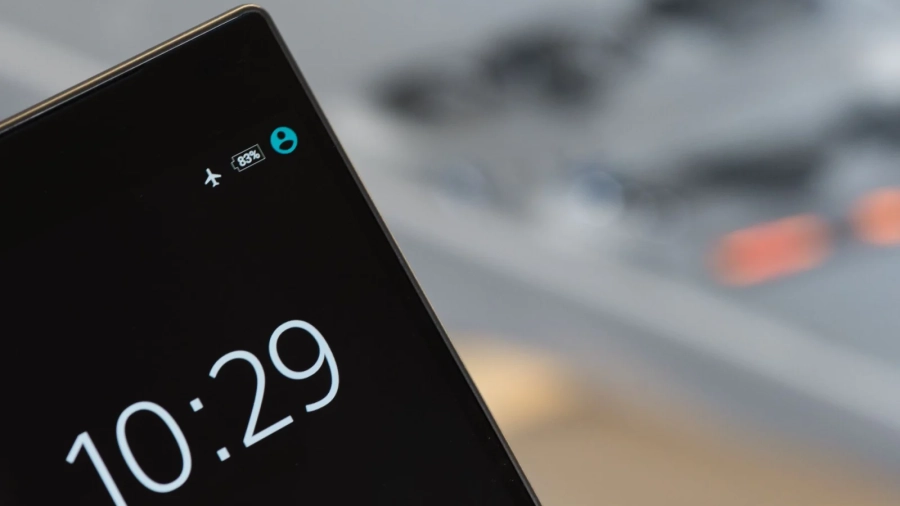
Smartphone in airplane mode held by a traveler, showing how to avoid roaming charges on a cruise

How to Avoid Roaming Charges on a Cruise (2026 Guide to Avoiding Huge Phone Bills)

The simplest way to avoid roaming charges on a cruise is to switch your phone to airplane mode before the ship leaves port, then turn Wi-Fi back on by itself so you can use the ship’s internet. That stops your phone from connecting to the ship’s own satellite-linked cell network, which is billed separately from your normal plan and can cost dollars (or pounds) per megabyte. If you want to use your phone at sea anyway, buy a cruise pass from your carrier or a Wi-Fi package from the cruise line in advance.

Knowing how to avoid roaming charges on a cruise matters because the bill can land weeks after you get home, long after you can do anything about it. Below we explain why phones run up big bills at sea, what US carriers and UK networks actually charge, and a simple routine that keeps your phone useful without the shock.

Why cruise roaming charges are so high

Once a ship is out of range of land-based masts, your phone can still find a signal. That signal comes from a small cell network on the ship itself, run by a maritime provider such as Wireless Maritime Services (the “Cellular at Sea” network used on many big ships) or similar operators on other lines. The ship’s network passes your calls and data up to a satellite and back down to land, which is expensive to run.

To your carrier, that onboard network is just another foreign partner network, but it sits outside the normal roaming deals. That is the key point many passengers miss:

  • US plans: International day passes and “free” international data on many plans generally cover countries, not ships. T-Mobile states plainly that cruise ships are not covered by its international data passes.
  • UK plans: EU “roam like at home” style allowances do not apply to satellite connections at sea. O2 notes that maritime and in-flight connections fall outside these rules, so charges “can be high”.

Phones are also chatty in the background. Even if you never open an app, photo backups, app updates, email sync and messaging apps can pull megabytes every hour. On a per-MB maritime rate, a single day of background data can add up to a bill in the hundreds.

When does the ship’s network switch on?

Ships normally switch their onboard cell service off when they are close to port and on again once they are out at sea, so you may not notice the change. The risky moments are sailaway and the hour before arrival, when your phone can hop between a land mast and the ship’s network. T-Mobile even advises customers to turn roaming off while the ship is docked in a US port, because a phone can latch on to the ship’s system before it sails.

How much are roaming fees on a cruise?

Prices vary by carrier, plan and ship, and they change often, so always check your own account before you sail. Here is what the carriers’ own pages showed in November 2026:

Carrier Cruise option What you get
AT&T (US) Cruise Day Pass, $15 per 24 hours (per AT&T’s support page, updated April 2026) Unlimited texts, calls to the US, data on select ships (speeds may slow after 500MB a day). Charged only on days you use it.
Verizon (US) Cruise Daily Pass, $20 per line per day 0.5GB high-speed data then slower speeds, unlimited calls to the US and texts. Charged only on days used at sea. Pay-as-you-go data is not available at sea.
T-Mobile (US) Pay-per-use cruise rates Cruise ship roaming on selected lines only; not covered by international data passes. Check rates and your ship in the T-Mobile app or website.
UK networks (EE, O2, Vodafone, Three and others) Separate maritime / satellite rates Not included in EU or worldwide roaming bundles. Rates are set per network, and past customer reports suggest several pounds per MB, so check your network’s maritime price list.

A couple of things to note. AT&T’s Cruise Day Pass and Verizon’s Cruise Daily Pass only charge on days you actually use service, and AT&T says the 24-hour period can be triggered by background data, not just a call. Some cruise partner pages quote different AT&T prices, so confirm the current figure in your account. Verizon’s pay-as-you-go rates for calls and texts are listed at $1.99 a minute and 50 cents per text sent, which shows how quickly casual use adds up without a pass.

Woman checking her smartphone settings on a cruise ship deck to avoid roaming charges at sea
Checking your phone settings at sailaway is the easiest way to avoid a surprise bill. Photo: Burak Arpaci on Pexels

How to avoid roaming charges on a cruise: step by step

This routine works on any phone and any carrier. Do it as part of your boarding-day checklist, alongside the other jobs in our guide to embarkation day mistakes and must-dos.

  1. Before you leave home, call or check your carrier app. Ask what your plan does at sea and in each port. Remove any cruise pass you don’t want, or add one if you do.
  2. Turn off data roaming. On iPhone it is under Settings > Cellular (Mobile Data) > Cellular Data Options. On Android it is usually under Network or Connections > Mobile network. This is your safety net if airplane mode gets switched off by mistake.
  3. Switch on airplane mode before sailaway. Do it once you are on board and before the ship leaves the dock.
  4. Turn Wi-Fi back on by itself. Airplane mode with Wi-Fi on lets you use the ship’s network and the cruise line’s app, while the cellular radio stays off.
  5. Turn off Wi-Fi Assist (iPhone) or Adaptive Wi-Fi / mobile data switching (Android). These features quietly fall back to cellular data when Wi-Fi is weak, which is exactly what you want to avoid.
  6. Pause automatic photo backup and app updates until you are home or on reliable Wi-Fi. They eat paid ship Wi-Fi and, if cellular is on, maritime data.
  7. Repeat after every port day. Switch airplane mode back on before you re-board, not once you are at sea.

Don’t forget smartwatches, tablets and kids’ phones

Any device with its own SIM or eSIM can connect to the ship’s network. That includes cellular smartwatches, iPads with mobile data and children’s phones. Put each one in airplane mode, or turn off the watch’s cellular plan, as these are a common cause of bills that passengers can’t explain. It is worth adding to your list when you work through our cruise packing tips and hacks.

A Wi-Fi calling caveat

Wi-Fi calling sounds like a loophole, and on ship Wi-Fi it often is, but read your carrier’s terms. T-Mobile states that Wi-Fi calls to non-US numbers from a ship are billed at the cruise rate. Some cruise Wi-Fi plans also block or degrade voice calls. The safer option is to call through an app such as WhatsApp, FaceTime or Messenger over a Wi-Fi package you have already paid for.

Using ship Wi-Fi instead of cellular at sea

For most passengers, a cruise line Wi-Fi package is better value than cellular at sea. Many big ships now use Starlink or similar low-orbit satellite systems, so speeds are much better than a few years ago and video calls are often possible. Prices have risen, though. A January 2026 Parade report noted Disney’s standard package at $30 per device per day, Carnival’s plans starting from about $20 a day bought in advance, and Royal Caribbean typically around $20 a day for one device, varying by ship.

Ways to keep Wi-Fi costs down:

  • Buy before you sail. Pre-cruise prices are usually lower than onboard prices, and lines often run sales.
  • Use the free app access. Most major lines let you use their own app on ship Wi-Fi without paying, for daily schedules, deck maps and, on some lines, onboard chat.
  • Choose a messaging-only plan if you only need WhatsApp or iMessage. It is cheaper than a full streaming package.
  • Share smartly. Some lines let you log out on one device and in on another, so a couple can share one plan.
  • Look for perks. Wi-Fi is sometimes bundled in fares, loyalty benefits or promotions. Check what your fare includes before you buy separately.
Colourful harbour town with boats, the kind of cruise port stop where local mobile networks can be used
In port, you may be back on land networks, so check your roaming settings before you go ashore. Photo: 0xd1ma on Pexels

Using your phone in port

When the ship docks, your phone connects to land networks again, so the usual international roaming rules apply rather than maritime rates. Your options:

  • Use what your plan already includes. Some US plans, notably many T-Mobile plans, include texting and some data in many countries. AT&T and Verizon generally charge a daily international pass on land, separate from their cruise passes.
  • UK passengers in Europe may have EU roaming included or available for a daily fee, depending on the network. Check before you sail, because rules differ between networks.
  • Try a travel eSIM. If your phone is unlocked and supports eSIM, a regional data eSIM bought before the trip can be cheaper for a multi-country itinerary. Note that these are for land networks; most do not cover ships at sea.
  • Use free Wi-Fi ashore in cafés and terminals, but avoid banking on public networks.

Before sailaway, switch airplane mode back on. Phones commonly jump onto the ship’s network during the last minutes in port.

What if you still get a big bill?

If a bill shows maritime or “ship” charges you didn’t expect, contact your carrier quickly. Ask for an itemised list showing dates, times and network names, which will tell you whether a device connected at sea. Carriers are not obliged to refund legitimate usage, but polite requests for a one-off goodwill credit sometimes succeed, especially if it’s your first time. UK customers who cannot resolve a billing dispute can escalate to an independent ombudsman after the network’s complaint process, as set out by Ofcom.

To stop it happening again, set up a spending alert or data cap in your carrier account. UK networks offer usage caps, and US carriers send usage alerts by text. Most importantly, make airplane mode a habit for every sea day; our list of sea day mistakes to avoid has more ways to make those days count.

FAQs

Does a cruise ship have data roaming?

Yes. Many ships run their own cell network, which connects to land by satellite. Your phone treats it as a roaming network, and it is billed at special maritime rates that are not included in normal roaming bundles.

How much are roaming fees on a cruise?

It depends on your carrier. As of November 2026, AT&T lists a Cruise Day Pass at $15 per 24 hours and Verizon a Cruise Daily Pass at $20 per day. Without a pass, pay-per-use rates apply, and UK networks charge separate maritime rates that past customers report at several pounds per MB.

Should I turn off roaming on a cruise?

Yes, unless you have bought a cruise pass. Turn off data roaming and use airplane mode with Wi-Fi switched back on. That way your phone can’t connect to the ship’s cell network by accident.

Can I use my phone on a cruise ship in airplane mode?

Yes. With Wi-Fi turned back on you can use the cruise line’s app, and with a Wi-Fi package you can use messaging and calling apps like WhatsApp and FaceTime, all without cellular roaming charges.

Is Wi-Fi calling free on a cruise ship?

Not always. You still need to pay for ship Wi-Fi, and some carriers bill Wi-Fi calls at cruise rates; T-Mobile does so for calls to non-US numbers. App-based calls over a Wi-Fi package are the safer choice.

oasis-night-new-york.jpg-1.jpg

6 Ways to Get Free Wi-Fi on Your Royal Caribbean Cruise

Cruise ship WiFi can be super expensive. Luckily, there are several ways that you can access the internet for free on Royal Caribbean cruise ships!

So, put your wallet away and read on to find out how to get free wifi on your next Royal Caribbean cruise. No dodgy WiFi hacks needed! These are all legitimate methods that are available to you.

Royal Caribbean wifi

First off – it’s not free as standard

Royal Caribbean WiFi typically is not free. WiFi packages start at around $20 per day for a single device. However, you don’t necessarily have to pay for internet access on your cruise.

The exact cost of Royal Caribbean WiFi is not fixed. It varies depending on:

  • The ship
  • The sailing
  • The number of devices used
  • Whether you buy a daily pass or get WiFi for your whole cruise
  • How far in advance you purchase WiFi
  • Whether there’s a sale on

The cheapest Royal Caribbean WiFi packages are around $20 per day, but it could cost you as much as $26 per day for a single device. It’s generally cheapest to buy WiFi before you cruise, and to buy a package for the whole cruise rather than for a single day.

Suggested read: Royal Caribbean Internet Package Prices

To see the WiFi options available for your cruise and the exact pricing, log on to the Royal Caribbean Cruise Planner.

If the WiFi package you want looks expensive, you could wait to see if it goes down, or try some of these ways to get free WiFi on your cruise…

Here’s how to get free WiFi:

1: Get free credit when you book your cruise

Royal Caribbean often offers free perks and incentives to encourage you to book a cruise. Sometimes, these special offers include free WiFi packages and sometimes they include free onboard credit, which you can then use to buy a WiFi package.

Free onboard credit is a common incentive that’s often used to encourage people to upgrade from an inside to an outside cabin, or from an outside to a balcony stateroom.

If you happen to get free onboard credit when you book your cruise, it’s easy to use this to buy a WiFi package – just go to the Royal Caribbean Cruise Planner and purchase the WiFi with your onboard credit before your cruise.

looking out to sea from a balcony on a Royal Caribbean cruise

It’s important to note that when free perks like free WiFi are included in a cruise holiday, it’s often the case that the cruise fare is higher than if you were to book it outside of this promotional period.

So, whilst it can seem that you’re getting free WiFi, you could actually be paying for it by paying more for your cruise overall.

NEW DEALS JUST RELEASED!

Don’t miss the latest Royal Caribbean offers…

2. Reach Diamond level in Royal Caribbean’s Crown & Anchor Society

Loyalty surely pays off when you’re a member of Royal Caribbean’s Crown & Anchor Society. This program, tailored to reward the most dedicated cruisers, not only showers guests with perks like free drinks and access to an exclusive lounge, but also ensures they remain connected to the online world during their voyages.

Being a Diamond, Diamond Plus, or Pinnacle Club member in the Crown & Anchor Society certainly has its internet privileges. Specifically:

Diamond Level

If you cruise enough to collect 80 to 174 points (that’s at least 80 nights at sea in a stateroom or 40 nights in a suite), you’ll reach Diamond status and get free WiFi for 24 hours on each cruise.

The 24-hour window starts ticking the moment you log in. So a good tip is to access the WiFi in the afternoon, then you’ll have it until the following afternoon. This technically gives you access on two different days.

If you’d rather buy the package for your whole cruise, you can instead get a discount of $25.99 off the package price.

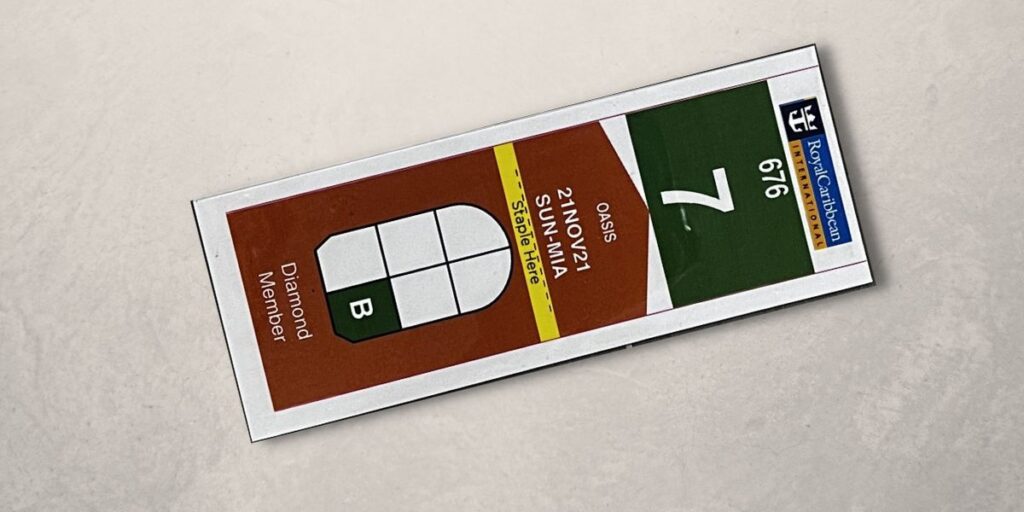
A diamond luggage tag

Diamond Plus Level

Cruisers who fall in this category, with 175 to 699 points, get WiFi access for 48 hours during their cruise. Again, you should try to time this to cover three days, preferably including your sea days.

Pinnacle Club Level

Pinnacle Club members, the top status level for those with over 700 loyalty points, enjoy a complete Surf & Stream internet package for one of their devices. This generous gesture from Royal Caribbean can save these top-tier members a significant amount, potentially amounting to thousands over multiple cruises.

Crown & Anchor Society WiFi Discounts

For those who haven’t reached these lofty heights in the Crown & Anchor Society, there’s still good news. Royal Caribbean ensures that even its Gold, Platinum, and Emerald members aren’t left adrift. They benefit from discounts on internet packages: 10% off for Gold members, and an appealing 15% off for both Platinum and Emerald members.

3. Get free WiFi with Casino Points

Royal Caribbean’s casino rewards program, Club Royale, offers avid casino-goers a chance to reap the rewards of their gaming, and one of these enticing benefits is free WiFi.

Joining the Club Royale program is free of charge, and the system is based on Tier Credits earned while playing in the casino. The more you play, the higher you climb in the program’s hierarchy, unlocking an array of benefits along the way, including WiFi perks.

Choice Tier – 1 to 2,499 Tier Credits

Though this first tier doesn’t offer complimentary WiFi, it’s the stepping stone to greater rewards.

Prime Tier – 2,500 to 24,999 Tier Credits

At this level, members can get a 30% discount on Royal Caribbean’s VOOM Surf & Stream internet package. You usually get 1 point for every $5 spent, so you would need to spend $12,500 in the casino to reach this level.

Signature Tier – 25,000 to 99,999 Tier Credits

At the Signature level, you’ll receive free WiFi for one device, ensuring seamless online connectivity throughout your cruise.

Masters Tier – 100,000+ Tier Credits

Reserved for the highest of rollers, Masters members are graced with free internet access on not one, but two devices. An internet luxury, indeed! You’ll likely need to spend around half a million dollars in the casino to reach this level, so at this point, Royal Caribbean really does want to keep you happy!

Royal Caribbean casino

Earning these coveted Tier Credits is simple: guests pocket 1 Tier Credit for every $5 coin-in at slot machines, and 1 Tier Credit for every $10 coin-in on video poker machines. For table games, the Tier Credits depend on the type of game, the average bet placed, and the duration of play.

While free WiFi is a tempting prospect, pursuing gambling solely for this perk isn’t the most economical decision. But for those who plan to spend considerable time in the casino anyway, the added benefit of free WiFi is a nice perk to have.

4. Stay in one of the top suites

If you’ve taken the plush route and have booked a suite for your upcoming cruise, you’re in for a delightful digital treat, especially if you’re onboard their Quantum, Oasis, or Icon Class ships.

For cruisers residing in the Grand Suites or higher categories on these ship classes, the digital world remains at their fingertips without any additional charge. Royal Caribbean generously offers a complimentary VOOM Surf & Stream WiFi package to these guests.

What’s even better? Every guest staying in the suite cabin gets this benefit, allowing each individual access to an internet package for one of their devices.

Grand Suite on Icon of the Seas

However, there are some exceptions to be aware of…

The free WiFi for suite guests applies only to those staying in Grand Suites and above. That means that anyone staying in Junior Suites will have to purchase their WiFi.

Additionally, those in Grand Suites and above on the older ships like Vision, Radiance, Voyager, and Freedom Class will also need to pay for their internet connectivity.

Not sure which class your ship is in? You can find that here: Royal Caribbean Ship Classes

5: Find free Wi-Fi hotspots off the ship

Free WiFi will be available in each of the ports that your cruise ship calls at, and it’s usually really easy to find.

If you’re happy to check your emails and update your social media only whilst your ship is in port, then this is the best way to get free WiFi on your cruise.

free wifi hotspot in port

How to find the free WiFi ashore

There are three ways to find free WiFi whilst your cruise ship is in port:

Use an open deck to check for networks

If there’s free WiFi in the cruise terminal, you might not need to leave the ship to access it, so this is worth a shot.

Walk along the port side of an open deck, such as the top deck or the promenade deck (if your ship has one), and see if you can find any free WiFi in range.

In some ports, the WiFi signal from the cruise terminal will reach to your ship whilst it’s in port.

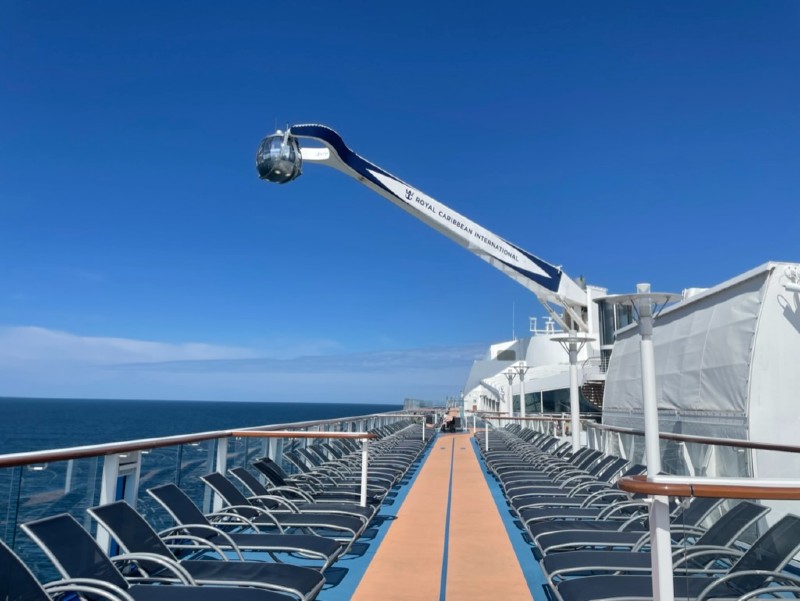
open deck on Anthem of the Seas

Ask the crew

You may be surprised to hear that crew members don’t get free WiFi on-board cruise ships. So, when they have a few hours off, one of their favourite things to do is to get off the ship and head straight for the nearest free WiFi hotspot. They’ll be happy to point you in the right direction.

Royal Caribbean crew member.

Use a free WiFi-finder app

If you go to the app store on your mobile device and search for ‘WiFi finder’ or ‘WiFi map’, you’ll find a great selection of apps that show where your nearest free WiFi points are on a map.

I’d recommend getting a couple of apps before you cruise, just in case the crew member that you ask isn’t sure, or you want to find WiFi whilst you’re off on an excursion.

6. Use the Royal Caribbean Chat App

Okay so this final way isn’t free, but it is a lot cheaper than buying WiFi.

If your main reason for wanting WiFi is so that you can keep in touch with others on the ship, then Royal Caribbean’s chat app is ideal. For only $1.99 per day, you can text other guests without an internet package.

So whether you want to meet up with your husband after he’s finished watching sports and you’re done in the spa or if you want to keep in touch with some new friends that you met on board, you can do that.

To use the service, all participants must purchase the chat facility, and you must do so for your entire cruise.

NEW DEALS JUST RELEASED!

Don’t miss the latest Royal Caribbean offers…

Final word

There are several ways to get free WiFi during your cruise, but it might still be best to pay for it. Unfortunately, there’s no real Royal Caribbean WiFi hack to get free internet when you shouldn’t.

When I’ve cruised in Europe, I’ve found that my UK mobile phone contract includes 4G data abroad, so I’ve just used that when the ship’s in port. On sea days, I’ve actually enjoyed not having WiFi.

When I’ve cruised in the Caribbean I have, on occasion, purchased the Royal Caribbean Voom WiFi package and found it to work great in most areas of the ship. Royal Caribbean extends its onboard WiFi to its private island, Perfect Day at CocoCay, and so it was a great bonus to be able to use the WiFi there too.

The Royal Caribbean cruise WiFi cost can be expensive, so always consider carefully whether you really need it.

Extra info available

If you have any questions about Royal Caribbean WiFi or getting internet on Royal Caribbean, you’ll find several Facebook groups where other cruisers can help. Take a look at the Royal Caribbean Cruising Facebook group and the Royal Caribbean Cruises Facebook group for good places to start.

Related posts

If you found this interesting, please share!

Cruise Mummy

Jenni Fielding is the founder of Cruise Mummy. She has worked in the cruise industry since 2015 and has taken over 30 cruises. Now, she helps over 1 million people per month to plan their perfect cruise holidays.

Read more about me

Source link

Person holding a smartphone on the deck of a cruise ship with the ocean behind

Is the AT&T Cruise Package Worth It? 2026 Prices, Ships and Tips

The AT&T cruise package (often called the AT&T cruise plan) today is the International Day Pass: $20 per line for each 24-hour period you use your phone at sea, with unlimited talk and text and 500MB of high-speed data a day, on 400+ cruise ships. Customers on the AT&T Elite 2.0 plan can use a cheaper Cruise Day Pass at $15 a day. It is worth it if you need your own number and messages on a few sea days, but ship Wi-Fi is usually better value for heavy data use.

AT&T has changed its cruise offering several times, so a lot of advice online is out of date. Below is how the current setup works as of October 2026, what a typical 7-night cruise could cost, and how it compares with onboard Wi-Fi and with Verizon and T-Mobile. Prices are AT&T’s published rates and can change, so check your account before you sail.

The AT&T Cruise Package Explained (2026)

Until April 2025, AT&T sold one-off packages called Cruise Basic and Cruise Plus, which bundled a fixed number of minutes and megabytes for a whole cruise. Those plans have been retired. AT&T now folds cruise coverage into the International Day Pass, which also covers more than 210 destinations on land.

How the International Day Pass works at sea

  • Price: $20 per line for each 24-hour period you use cellular service at sea. If you are at sea and on land in the same period, the $20 covers both.
  • Included: unlimited talk and text (calls to the U.S. and other included destinations), plus 500MB of high-speed data per 24 hours. AT&T says speeds may then be cut to 512Kbps on some ships until the next period starts.
  • Eligibility: it is added to an existing AT&T unlimited plan.
  • Billing: the 24-hour clock starts the first time you make or take a call, send a text or use data. You are only charged for periods you actually use the phone.
  • Automatic add-on: if you haven’t added it, AT&T adds it when you connect to an included ship or destination and texts you to confirm.

AT&T Cruise Day Pass for Elite 2.0 customers

If you are on the AT&T Elite 2.0 plan, AT&T offers a separate Cruise Day Pass at $15 per 24-hour period of use at sea. It includes unlimited sent texts, calls received and calls to the U.S. or Elite 2.0 destinations, and at least 500MB of the ship’s best-speed data per day before speeds drop to a maximum of 512Kbps. It only works at sea (at least 6 nautical miles from land) on included ships, not in port or on land. Received texts alone don’t trigger the fee, but background app data does.

Pay-per-use rates if you have no pass

Using your phone at sea without a pass is where people get burned. According to AT&T’s Cruise Day Pass terms, consumer pay-per-use rates at sea from May 6, 2026 are:

  • Data: $2.05 per MB (a single 100MB day would be about $205)
  • Calls: $4 per minute
  • Texts sent: $1 each; photo or video messages: $2 each

In practice, AT&T usually adds a day pass automatically once you use the ship’s network, but you should not rely on that. Add the pass before you leave home, or keep cellular data switched off.

Which Cruise Ships Does the AT&T Cruise Plan Cover?

AT&T says its cruise coverage works on more than 400 cruise ships. Its own pages name major lines such as Carnival, Disney, Norwegian, Princess, Royal Caribbean and Virgin Voyages, and it publishes a downloadable ship list. Onboard cellular networks are run by specialist maritime providers such as Telenor Maritime and Wireless Maritime Services (WMS), and AT&T customers roam onto them.

Three things to know about coverage:

  1. Check your exact ship. Not every ship in a fleet is always included, and lists change. Search AT&T’s current list before you book anything.
  2. The ship network switches off near land. Ships generally count as at sea once they are about six nautical miles or more from shore. In port your phone roams on local land networks, which the International Day Pass covers at its land rate in included destinations.
  3. Signal varies around the ship. Coverage tends to be strongest in public areas and can be weaker in some cabins or lower decks.
Large white cruise ship sailing across open blue ocean far from land
At sea, your phone connects to the ship's own cellular network. Photo: SlimMars 13 on Pexels

What a 7-Night Cruise Could Cost: AT&T vs Ship Wi-Fi

To make the numbers concrete, here is a typical 7-night Caribbean itinerary from Florida with four sea days and three foreign port days. (If you’re still choosing a sailing, our comparison of the cheapest 7-day cruises out of Florida is a useful starting point.) Figures are per phone and approximate.

Option How it’s charged Estimated 7-night cost Best for
AT&T International Day Pass (use every day) $20 x 4 sea days + $12 x 3 port days About $116 Staying reachable on your own number
AT&T International Day Pass (sea days only, airplane mode in port) $20 x 4 sea days About $80 Check-ins on sea days
AT&T Cruise Day Pass (Elite 2.0 only) $15 x 4 sea days (ports billed separately under your plan) About $60 at sea Elite 2.0 customers
Pay-per-use, no pass $2.05/MB, $4/min, $1/text Can run into hundreds of dollars Nobody – avoid
Ship Wi-Fi package (one device) Per day or per voyage, set by the cruise line Often roughly $100 to $250+ Streaming, video calls, heavy data

Ship Wi-Fi pricing varies a lot by cruise line, package tier and whether you buy before sailing, so treat that last row as a rough range and check your line’s current prices. The important point is that the AT&T pass works out per phone, while Wi-Fi is per device: a couple who both want connectivity pay twice either way.

AT&T Cruise Package vs Starlink Ship Wi-Fi

Most big cruise lines have now moved their onboard internet to Starlink or similar low-orbit satellite systems, and that has changed the value equation. Starlink-based ship Wi-Fi is typically fast enough for streaming and video calls, which AT&T’s 500MB daily allowance is not designed for.

When AT&T makes more sense

  • You want normal phone calls and SMS on your own number, for example for work or family emergencies.
  • You only need light data: messages, maps, email and a little social media.
  • You’ll only switch on for one or two sea days, so you pay just $20 (or $15) on those days.
  • You want something that works the moment you step on board, with no login.

When ship Wi-Fi is better value

  • You’ll stream, upload photos or video call home.
  • You want connectivity every day of the cruise; full-voyage Wi-Fi packages often cost less per day than a daily cellular pass.
  • You can do everything through apps like WhatsApp, FaceTime or iMessage over Wi-Fi.

Plenty of cruisers combine the two: Wi-Fi for one phone, and the AT&T pass switched on only when it’s needed. Families sometimes skip both for the kids and use walkie-talkies on board instead; see our guide to walkie-talkies that actually work on cruise ships.

How AT&T Compares With Verizon and T-Mobile at Sea

Carrier At-sea option Headline price What you get
AT&T International Day Pass $20 per 24 hours Unlimited talk/text, 500MB high-speed data, 400+ ships
AT&T (Elite 2.0) Cruise Day Pass $15 per 24 hours Talk/text, 500MB+ high-speed data, at sea only
Verizon Cruise Daily Pass $20 per 24 hours (launch price, 2025) 0.5GB high-speed data, unlimited texts, calls to the U.S.; 200+ ships
T-Mobile Pay-per-use only Around $0.50 per text and $5.99 per minute (reported) Texts and calls; no data at sea

Verizon’s cruise pass is broadly similar to AT&T’s, though AT&T currently quotes a larger ship count. T-Mobile does not sell a cruise pass at the time of writing; its International Pass covers land only. Rates for all three carriers change regularly, so confirm on the carrier’s site before sailing.

Hand holding a smartphone showing the settings screen while travelling
Set up your pass and roaming settings before you leave home. Photo: Brett Jordan on Pexels

How to Set Up the AT&T Cruise Package

  1. Check eligibility. You need an AT&T unlimited plan for the International Day Pass, or Elite 2.0 for the $15 Cruise Day Pass.
  2. Check your ship on AT&T’s current cruise ship list.
  3. Add the pass before you leave through the myAT&T app or att.com. Add it to every line that will travel.
  4. Update your phone and download what you need at home: offline maps, playlists, films and the cruise line’s app.
  5. Turn off automatic updates and backups so they don’t use your 500MB on day one.

Airplane Mode and Data Roaming Tips

Because one stray background sync can start a $20 day, a few habits save real money:

  • Use airplane mode as your default on days you don’t plan to use the pass, then switch Wi-Fi back on if you’ve bought ship internet. Wi-Fi works with airplane mode on.
  • Turn off data roaming (iPhone: Settings > Cellular > Cellular Data Options; Android: Network settings > Mobile network). This stops background data while still letting you send an SMS if you need to, which starts the day on a pass.
  • Remember the 24-hour clock. The pass runs 24 hours from first use, not by calendar day, so switching on at 8pm and again at 9am the next day costs one period, not two.
  • Watch the sail-away. As the ship leaves port, phones can pick up the ship network. If you don’t want a charge that day, switch to airplane mode before departure.
  • Check usage in the myAT&T app; AT&T also texts you when a day pass starts.

AT&T Cruise Package Reviews: What Cruisers Report

Feedback from cruisers on forums and social media follows a consistent pattern:

  • Calls and texts work well. Most people who use the pass for messaging home, checking in with family or the occasional call find it reliable on sea days.
  • Data is the weak point. 500MB a day goes quickly, and once speeds drop to 512Kbps, maps, video and photo uploads slow to a crawl. Heavy users usually end up buying ship Wi-Fi as well.
  • Surprise charges come from background data. Many complaints trace back to apps updating in the background, which triggers a day pass on a day the person did not mean to use their phone.
  • Coverage depends on the ship. The ship’s own cellular network is usually switched off in port and near land, so expect gaps.

In short, the AT&T cruise plan gets good reviews as a backup for calls and texts, and mixed reviews as a main internet connection.

Is the AT&T Cruise Package Worth It?

For most AT&T customers, yes, as a targeted tool. At $20 a day (or $15 on Elite 2.0), with charges only on days you use it, the pass is far cheaper than pay-per-use and simpler than any cruise line plan for calls and texts. It is less convincing as your only internet on a long cruise: 500MB a day won’t cover streaming, and a full-voyage Starlink Wi-Fi package often costs less per day if you want to be online all the time.

A sensible plan: buy ship Wi-Fi if you need lots of data, keep the AT&T pass on your account as a backup, and leave your phone in airplane mode unless you need it. Planning further ahead? Our roundup of cruise deals for 2027 lists sailings worth watching.

FAQs

How much is the AT&T cruise package?

The AT&T International Day Pass costs $20 per line for each 24-hour period you use your phone at sea, including unlimited talk and text and 500MB of high-speed data. Elite 2.0 customers can use the Cruise Day Pass at $15 per day at sea. Prices can change.

How does the AT&T cruise package work?

Add the International Day Pass (or the Cruise Day Pass on Elite 2.0) to your line before you sail. When your phone connects to the ship’s cellular network and you make a call, send a text or use data, a 24-hour period starts and you are charged $20 (or $15). Days when you keep the phone in airplane mode or on Wi-Fi only cost nothing.

How does AT&T cellular at sea work?

Cruise ships carry their own cellular network, connected by satellite. Your AT&T phone roams onto it once the ship is about six nautical miles from land, and the day pass is charged only for 24-hour periods when you use talk, text or data.

Are AT&T Cruise Basic and Cruise Plus still available?

No. AT&T retired Cruise Basic and Cruise Plus for cruises starting on or after April 16, 2025, and replaced them with cruise coverage in the International Day Pass.

How do I use my phone on a cruise without getting charged?

Keep your phone in airplane mode with data roaming off, and connect only to ship Wi-Fi. Turn off automatic updates and backups, and switch to airplane mode before the ship leaves port.

Is the AT&T cruise plan better than ship Wi-Fi?

For calls, texts and light data on a few days, the AT&T pass is simple and good value. For streaming, video calls or daily use, a cruise line Wi-Fi package is usually better value.

Cruise ship docked beside a colorful port town, the starting point for cheap shore excursions

Cheap Shore Excursions: How to Save Money on Every Port Day (2026)

The easiest way to find cheap shore excursions is to stop treating the cruise line’s tour menu as your only option. Booking independently through a reputable platform, joining a tip-based walking tour, or simply doing a port yourself by taxi, bus or on foot can cut the cost of a port day by half or more. The trade-off is that only ship-sold tours come with an automatic promise that the ship will wait for you, so you need to plan your return time carefully.

Below is a practical guide to saving money on shore excursions in 2026 and 2027: where the real price gaps are, which independent companies offer a back-to-ship guarantee, and when doing it yourself makes the most sense.

Why cruise line excursions cost more

Cruise lines sell tours run by local operators, then add their own margin for marketing, vetting, insurance and the guarantee that the ship will not sail without a delayed tour group. That convenience is real, but it is priced in. The same catamaran, rainforest walk or city coach tour is often sold by the operator or a third-party platform for noticeably less.

Ship tours also tend to run in large groups. A coach of 40 to 50 passengers moves slowly, and you pay for that scale without getting a cheaper per-head price. Cruise Critic suggests budgeting at least $50 per adult per excursion on a mainstream line, with specialty experiences like helicopter or flightseeing tours running into the hundreds.

None of this means ship tours are a bad deal. In ports where the sights are far from the pier, where you only have a few hours, or where a few ports restrict passengers to ship-sponsored tours, the cruise line can be the right call. The point is to pay the premium only where it buys you something.

How to book shore excursions independently (and safely)

If you decide to book shore excursions independently, the biggest question is not price but timing. With an independent tour, getting back before all-aboard is your responsibility, and the ship is not obliged to wait. The companies below try to close that gap in different ways.

Shore Excursions Group

Shore Excursions Group specializes in cruise port tours and builds its schedules around ship times. Its “Worry Free Travel” promise says that if a tour delay causes you to miss the ship, it will cover transportation to the next port, hotel accommodation and meals, plus a cash payment for the inconvenience (its site currently lists $3,000 per person). It also advertises a price match against lower prices for the same tour. It is also the company behind the shore excursions sold through Costco Travel.

ToursByLocals

ToursByLocals connects you with private local guides, which makes it a good fit for families or small groups who can split one price. Its “No One Left Behind” guarantee says that if you do not make it back to the ship, it covers food, accommodation and transport to the next port of call.

Viator and GetYourGuide

Viator and GetYourGuide are large marketplaces with thousands of tours from different operators, including many labeled as cruise or shore excursions. Prices can be very competitive, and Viator has a cruise search tool that filters tours to fit your port times. However, guarantees and cancellation terms vary by product and operator, so read the listing carefully. Look for a clear return-to-ship promise, pickup at the cruise terminal, a finish time that leaves at least an hour before all-aboard, and free cancellation if the ship skips the port.

Booking directly with a local operator

Booking directly with a well-reviewed local company is often the cheapest route of all, especially for beach breaks, snorkel trips and island tours in the Caribbean. Many operators know the ship schedules well and plan around them, but few offer a formal written guarantee. Ask in writing what happens if the tour runs late, and keep the operator’s phone number handy on the day.

Small group of tourists walking through a narrow old town street on a sunny day
Walking tours and DIY strolls are among the cheapest ways to see a port. Photo: Rachel Claire on Pexels

Cheap shore excursions you can do yourself

Some of the best value port days involve no tour company at all. These options work especially well in compact, well-connected ports.

  1. Explore on foot. Many ports drop you within walking distance of a historic center, waterfront or market. Our guide to walkable cruise ports you don’t need excursions for is a good starting point.
  2. Join a tip-based walking tour. In many European cities, “free” walking tours run on a pay-what-you-like basis. You book a spot online and tip the guide at the end. Check the start time against your ship’s arrival and allow time to get from the pier to the meeting point.
  3. Take a DIY beach day. In Caribbean ports, a shared taxi to a public beach plus a chair rental usually costs far less than a ship-sold “beach break.” Agree the fare before you get in, and confirm whether it is per person or per car.
  4. Use public transport. Trains, buses and ferries in places like Barcelona, Lisbon, Naples and much of Northern Europe are cheap and reliable. A day ticket can open up an entire city for the price of a coffee and a snack.
  5. Ride a hop-on hop-off bus. These sightseeing buses cover the main sights with commentary and let you set your own pace. Buy the ticket from the official operator rather than a reseller at the pier, and note the time of the last return to the port stop.

Price comparison: ways to spend a port day

Prices vary widely by port, season and group size, so treat these as typical patterns rather than fixed rates.

Option Typical cost Ship waits for you? Best for
Cruise line excursion Highest per person Yes Tight port times, distant sights, peace of mind
Shore Excursions Group Often lower than the ship No, but company guarantees onward travel Similar tours with smaller groups
ToursByLocals private guide One price split across your group No, but company guarantees onward travel Families and groups of 4 or more
Viator or GetYourGuide Often competitive No; terms vary by listing Wide choice, easy comparison
Local operator direct Often the lowest No Simple beach, snorkel and island tours
Tip-based walking tour Tip only No City ports in Europe
DIY (walk, taxi, bus) Lowest No Walkable ports and beach days

Group and private tours: when splitting the cost wins

Private tours sound expensive, but the price is usually per vehicle or per group rather than per person. For a family of four or a group of friends, a private driver or guide can cost about the same per head as a crowded ship tour, while letting you choose the stops and the pace.

Cruise forums such as Cruise Critic’s roll calls let passengers on the same sailing team up to fill a private van or boat. This is one of the most overlooked ways to save money on shore excursions, especially in ports like Rome, Florence, Ephesus or Alaska where transport is the biggest cost. Agree on payment, meeting points and return times in writing before the cruise.

When to book for the best price

  • Watch pre-cruise sales. Major lines regularly run sales in their online planners, often around Black Friday, the holidays and other promotions, with discounts that have reached 30 to 35 percent off add-ons. If you book a ship tour and the price drops, check whether you can cancel and rebook at the lower rate.
  • Book popular tours early. Limited-capacity experiences such as Alaska whale watching, glacier flights and small-group Mediterranean tours can sell out, independent or not.
  • Wait where it makes sense. For simple beach days or city walks, there is little benefit to locking in early. Waiting lets you see the weather forecast and confirm the port is still on the itinerary.
  • Check onboard deals. Some ships discount under-sold tours close to the port day. It is not guaranteed, so do not rely on it for must-do experiences.
Snorkelers in clear turquoise water near a sandy tropical beach
A DIY beach and snorkel day can cost far less than a ship-sold tour. Photo: Kristy Wells on Pexels

Use credits and perks you already have

Before you pay cash for anything, check your booking for onboard credit or a shore excursion credit. Some lines and travel agents include these as booking perks, and unused shore credit is rarely refunded, so it is worth applying it to the most expensive tour of the trip. Loyalty programs and travel agent promotions sometimes add discounts too.

Pairing credits with a mix of DIY port days and one or two splurges is often the sweet spot. Spend on the ports that need transport or expertise, such as a Mediterranean shore excursion to Pompeii or Ephesus, and keep the easy ports cheap. For more ways to protect your budget, see our tips on avoiding extra spending on board your cruise.

Safety and insurance on independent tours

  • Build in a buffer. Aim to be back at the pier at least an hour before all-aboard, more in ports with heavy traffic or tender boats.
  • Set your watch to ship time. Ships do not always change to local time, and this mismatch catches people out.
  • Carry the ship’s port agent details. They are usually printed in the daily program and are your first call if you are running late.
  • Check reviews and licensing. Favor operators with recent, detailed reviews and clear contact details. Be wary of cash-only deals from touts at the pier unless the vendor is clearly licensed.
  • Buy travel insurance with missed connection cover. A good policy can help if a delay leaves you stranded, and it may reimburse a prepaid tour if the ship skips the port. Read the terms carefully, since cover for missed departures varies.

Adventure-style trips like zip lines, ATVs and diving deserve extra scrutiny on safety standards. For these, a vetted platform or the cruise line’s own tour can be worth paying extra for.

If excursions are out of budget, consider the pros and cons of staying on board during a port day instead.

Sometimes the cheapest excursion is no excursion at all, so read our guide to when to stay on the ship on port days.

FAQs

Is it cheaper to book shore excursions independently?

Usually, yes. Independent platforms and local operators often charge noticeably less than the cruise line for similar tours, though the cruise line’s tours come with a guarantee that the ship will wait if the tour runs late.

Will the ship wait for me on an independent tour?

No. Ships wait only for their own sponsored tours. Some independent companies, such as Shore Excursions Group and ToursByLocals, promise to get you to the next port if you miss the ship due to their delay.

How much should I budget for shore excursions?

A common rule of thumb is at least $50 per adult per excursion on a mainstream line, with premium experiences costing several hundred dollars. DIY port days can cost little more than taxi or bus fares.

Are shore excursions worth it?

They are worth it when sights are far from the port, time is tight or you want a specialist guide. In walkable ports, exploring on your own is often just as rewarding and much cheaper.

Is Costco shore excursions the same as Shore Excursions Group?

Costco Travel’s shore excursions are provided by Shore Excursions Group, so the tours and return-to-ship guarantee come from that company.

Cruise ship at sea at sunset, illustrating the cheapest time to cruise in the quieter off-peak months

The Cheapest Time to Cruise: Best Months to Sail by Region

The cheapest time to cruise is usually the stretch between back-to-school and the holidays: late September through mid-November in the Caribbean and Bahamas, plus the quiet weeks of January and early February. Further afield, Alaska is cheapest at the very start and end of its season (late April, May and September), and the Mediterranean is cheapest in late autumn and winter. A good rule: look for weeks when children are in school and the weather is a little less than perfect.

Below you’ll find a month-by-month guide to cruise prices, the cheapest months for each major region, the holiday weeks that push fares up, and a short note on when to book once you’ve picked your dates.

Why the Month You Sail Matters So Much

Cruise fares are set by demand, and demand follows the calendar. Lines raise prices for sailings that fill on their own (school summer holidays, spring break, Christmas) and cut them for weeks that are harder to sell. Two things drive most of those dips:

  • School calendars. Once families are tied to term dates, ships have more empty cabins, and prices fall to fill them.
  • Weather and seasons. Every region has a peak, a shoulder and an off season. Shoulder months often bring the best balance of lower fares and decent conditions.

The differences are bigger than many people expect. Cruise Critic pricing data for 2027 sailings, published by NerdWallet in November 2026, shows an inside cabin on a Caribbean, Bahamas or Bermuda cruise averaging around $716 in October against about $1,092 in July. In Alaska, a July balcony averaged about $2,452, compared with roughly $1,391 in April. These are average starting fares across many lines, so individual sailings will vary, but the pattern is clear.

Cheapest Month to Cruise: Month-by-Month Guide

This table sums up how prices typically behave through the year for cruises from North America. “Low” means you’ll usually find the softest fares; “High” means you’ll pay a premium.

Month Typical price level What’s going on
January Low (after New Year) Post-holiday lull; good Caribbean value, cooler Mediterranean sailings at their cheapest
February Low to medium Still quiet, but Presidents’ Day week and winter breaks raise prices
March High Spring break for many US schools and colleges
April Medium to high Easter and spring breaks; early-season Alaska and Europe start low
May Low to medium A sweet spot between spring break and summer; Alaska and Bermuda shoulder season
June High School is out; summer pricing begins
July Highest Peak family travel everywhere, plus July 4th
August High, easing late Busy in Europe; Caribbean softens as schools restart
September Low Back-to-school and peak hurricane season; Alaska ends its season
October Low Often the cheapest Caribbean month; fall repositioning cruises begin
November Low (except Thanksgiving) Quiet weeks before and after Thanksgiving; repositioning season
December Low early, highest late Early December is a bargain; Christmas to New Year is the priciest week of the year

If you want one answer to “what is the cheapest month to cruise?”, October is the most consistent bet for the Caribbean and Bahamas, with September and early December close behind. For a winter escape, the first three weeks of January are often excellent value too.

Quiet tropical beach with palm trees and calm turquoise water during the Caribbean low season
The Caribbean is usually cheapest from September to early December. Photo: Gopinath Mohanta on Pexels

Cheapest Time to Cruise by Region

Caribbean

The Caribbean has cruises all year, which makes it the easiest place to chase low fares. Peak season runs from December to April, when the weather is dry and sunny and ships are full. The best deals usually appear in September, October and early December, with good value in late April and May as well. Royal Caribbean’s own seasonal guide points to late September through mid-November or early December as the cheapest window, between the back-to-school dip and the holiday rush.

The trade-off is the weather. The Atlantic hurricane season runs from June 1 to November 30, with activity usually peaking around mid-September. Ships rarely sail into storms, but itineraries can change at short notice, ports can be swapped and seas can be rougher. Southern Caribbean routes (Aruba, Bonaire, Curaçao) sit further from the usual storm tracks and can be a smart choice if you want to sail in the fall.

Bahamas

Short Bahamas cruises from Florida are among the cheapest cruises you can book, and the timing pattern mirrors the Caribbean. Look at September through mid-November, the first half of December, and January once the New Year crowds have gone home. Weekend three- and four-night sailings are popular, so midweek departures (often four nights from Monday) can be cheaper. Avoid spring break and the summer holidays if price is your priority.

Alaska

Alaska’s cruise season runs roughly from late April to late September or early October. Fares are highest in June, July and August, when the weather is warmest and families travel. The cheapest time to cruise Alaska is at the edges: late April, May and September. You’ll trade some warmth and daylight for lower fares, and May tends to be drier than September, while September can bring fall colors and darker skies for possible northern lights. For a deeper look at weather, wildlife and trade-offs month by month, see our guide to the best time to cruise Alaska.

Europe and the Mediterranean

Mediterranean cruising peaks in July and August, when ports are crowded and hot and fares are at their highest. The shoulder months of April, May, late September, October and November are cheaper and usually more comfortable for sightseeing. A growing number of ships now stay in the Mediterranean through winter, and the 2027 data suggests January is the cheapest month of all, though you’ll have cooler weather, shorter days and some attractions on reduced hours. Northern Europe and the Norwegian fjords have a shorter summer season, so look at May and early September for lower prices.

Bermuda and the Mexican Riviera

Bermuda cruises run mostly from spring to fall, with the best value in the shoulder months of May and October. On the West Coast, Mexican Riviera fares spike around the December holidays, while late winter (February) and late summer tend to be cheaper.

Holiday Weeks to Avoid If You Want a Cheap Cruise

Even in an otherwise cheap month, a single holiday can push fares sharply higher. If your dates are flexible, steer clear of these weeks:

  • Christmas to New Year’s Day: usually the most expensive week of the year to sail.
  • Thanksgiving week: November is cheap, but the Thanksgiving sailing isn’t. The weeks just before and after are much better value.
  • Spring break (March to mid-April): school and college breaks fill ships, especially short Bahamas and Caribbean cruises.
  • Easter: the date moves each year, so check the calendar before booking April sailings.
  • Long weekends: Martin Luther King Jr. Day, Presidents’ Day, Memorial Day, July 4th and Labor Day all lift prices on short cruises.
  • June to mid-August: summer school holidays are peak season in almost every region.

The flip side is that the week right after a big holiday is often among the cheapest of the year. The first full week of January and the week after Thanksgiving are classic examples.

Large cruise ship sailing across open ocean on a long transatlantic crossing with no land in sight
Repositioning crossings spread the fare over many nights at sea. Photo: Aleksandr Poklad on Pexels

Repositioning Season: The Hidden Cheap Time to Cruise

Twice a year, cruise lines move ships between regions: from the Caribbean to Europe or Alaska in spring (roughly March to May) and back again in fall (roughly September to November). These one-way repositioning cruises are often some of the lowest per-night fares you’ll find, because lines need to move the ship anyway and would rather sell cabins than sail empty.

For fall 2026 transatlantic crossings, mainstream lines were advertising balcony cabins at roughly $90 to $160 per person per night, which compares well with peak-season Caribbean pricing. The catches: long stretches at sea, few port stops, and a one-way flight to pay for. If you love sea days, they can be outstanding value. Our repositioning cruise tips cover how to plan flights and pick the right crossing.

When to Book vs. When to Sail

Choosing the cheapest time to cruise and choosing the best time to book are two separate decisions. Sailing in a low-demand month does most of the work; booking at the right moment adds extra savings or perks on top.

  • Cheap sailing months (September, October, early December, January) often have plenty of cabins, so last-minute price drops are more common for these dates.
  • Peak sailings (summer, holidays, spring break) rarely get cheaper, so booking early usually wins.
  • Sales periods such as Black Friday and wave season (January to March) bring promotions like onboard credit, reduced deposits or bundled drinks.

For a full breakdown of booking windows and which promotions are worth watching, see our guide to cruise deals in 2027 and when to book.

Tips for Getting the Lowest Fare in a Cheap Month

  • Be flexible by a week or two. Prices for the same ship can change noticeably from one departure to the next.
  • Compare the price per night. Longer cruises and repositioning sailings often cost less per night than a short weekend trip.
  • Look at older or mid-size ships. Brand-new ships command higher fares even in quiet months.
  • Add up the extras. Taxes, port fees, gratuities, flights and a hotel night before sailing can outweigh a small fare difference.
  • Buy travel insurance for hurricane season. If you sail between August and October, make sure your cover includes weather-related delays and missed connections.
  • Watch your fare after booking. Some lines and travel agents will reprice or add perks if the fare drops before final payment, depending on the fare type.

If you are still deciding where to sail, our guide to cruise destinations by climate matches each region to the weather and months that suit it.

If you are looking at autumn sailings, see our guide to the best places to cruise in October.

FAQs

What is the cheapest month to go on a cruise?

For the Caribbean and Bahamas, October is usually the cheapest month, followed by September and early December. For Alaska it’s April, May or September, and for the Mediterranean it’s the winter months, with November a good mix of value and mild weather.

How far out should I book a cruise for the best price?

For popular dates such as summer, holidays and spring break, booking 9 to 12 months ahead usually gets the best fares and cabin choice. For off-peak sailings, good deals can also appear a few months before departure, after final payment dates pass.

Do cruise prices go down last-minute?

Sometimes, mainly on off-peak sailings that haven’t sold well. Last-minute deals are much rarer for summer and holiday cruises, and the cheapest cabin types often sell out, so it’s a gamble best suited to flexible travelers who live near a cruise port.

Is it safe to cruise during hurricane season?

Cruise lines monitor storms closely and change routes to avoid them, so passenger safety is rarely the issue. The real risks are changed ports, rougher seas or delayed embarkation, which is why travel insurance and flexible plans matter if you sail from August to October.

How can I get a lower price on a cruise?

Sail in a shoulder or off-peak month, avoid holiday weeks, compare per-night prices across ships and departure dates, and book during a sale period for added perks. Choosing an inside or oceanview cabin also makes a big difference.

MSC-World-Europa-Venom-Drop-1.jpg

9 Overrated Cruise Attractions You Should Definitely Skip

These days, cruise ships are absolutely packed with things to see and do, and all kinds of extra features designed to encourage you to book, or spend more money once you’re already onboard. They certainly aren’t like cruise ships even 10-15 years ago.

The 'Venom Drop' on MSC World Europa at twilight, an enthralling cruise ship waterslide that winds between LED-lit balconies, juxtaposing modern design with the thrill of an at-sea adventure, captured against a backdrop of a fading sunset.

But you likely aren’t going to have time to try everything, unless you’re on a longer cruise with a lot of sea days. So, what are the attractions that aren’t worth it, either because they’re too expensive or they just aren’t as fun as they should be?

Let’s take a look.

1. Butlers

A diligent butler on a Cunard cruise ship meticulously prepares a stateroom, showcasing his attention to detail while arranging a red bed runner on crisp white bedding, embodying the line's commitment to luxury and service.

There are certain cruise rooms – typically suites – that advertise themselves as having butler service. This sounds very fancy, and could convince you to upgrade your room to a much more expensive option if you wanted to try out this perk.

But in reality, most people don’t know what to really use a butler for. In fact, it’s one of the more popular questions on cruise forums – what exactly can you ask a butler to do that’s different from your regular stateroom attendant?

There are a few services they might offer, depending on the cruise line, such as shoe shining, or taking care of your laundry, or packing and unpacking for you.

For most people though, you likely won’t make use of them very much, and having a regular stateroom with an attendant will be plenty – especially since people don’t just pay extra for the perk of having a butler, but they then are likely to tip them more as well.

A butler on a Silversea cruise ship provides meticulous shoe shining service, highlighting the exceptional personal care and attention to detail offered to guests aboard the luxury liner.

If you are tempted by a butler, be aware that on most ships, they won’t be exclusive to your suite. On cruise lines like Royal Caribbean (who have the Royal Genie instead of a butler) or NCL in The Haven, the butler will be working with several guests across multiple staterooms – so they aren’t completely at your beck and call.

Instead…

Book a regular stateroom – it won’t take you long to sort your own laundry or do your own unpacking.

2. Afternoon Tea

An elegant afternoon tea setup on Virgin Voyages with a bottle of Moët & Chandon, delicate pastries, macarons, and finger sandwiches on a tiered server, accompanied by fine china and flutes of champagne, offering a luxurious high tea experience at sea.

Afternoon tea is a nice activity on land when you want to go to a cafe or a posh hotel and try some delicious sandwiches and cakes. But on a cruise ship, is it worth the extra cost?

I’d argue that it isn’t, simply because you can grab the same food elsewhere on the cruise without paying for it. Sure, it might not come on a fancy stand, but is that really much of a dealbreaker for you? And the quality often isn’t great.

If you have special dietary requirements, the afternoon tea can be particularly disappointing. I once had a vegan afternoon tea that consisted of gluten-free scones with margarine and sandwiches with only cucumbers and olives. Yuk!

Instead…

Head to the ship’s included cafe or the buffet restaurant, and pick the items you like – especially since you can get as many of them as you want.

3. Dry Slides 

The Ultimate Abyss, the tallest slide at sea, descends dramatically on Royal Caribbean's Harmony of the Seas, set against the backdrop of the ship's unique architecture with colorful Boardwalk eateries and ambient lighting.

Several cruise ships have added dry slides that span several decks of the ship. The Ultimate Abyss on Royal Caribbean is one of the more well-known examples, but MSC and NCL also have dry slides on some of their biggest ships too.

However, they aren’t all they’re cracked up to be. They can often be quite slow, although I love the tip that it’s better to ride earlier in the morning when the humidity is higher and you’ll go a little faster. But still, a lot of people find them to be a bit bland, and they can even get a nasty burn!

They are free, so do have a go if there’s no queue, but they aren’t worth waiting in line for.

Instead…

Hit the waterslides on a cruise ship instead. They might also have a bit of a line, but they tend to be a lot more fun.

Suggested read: The Best Cruise Ships With Water Slides

4. Cruise Line Shore Excursions

A group of cheerful cruise guests bundled up in warm attire pose together during a scenic shore excursion, with the majestic backdrop of a mountainous landscape and a serene lake, capturing a moment of camaraderie and adventure.

This one’s a bit of a controversial one, but I wanted to include it because I know a lot of cruise passengers will feel that these are overrated.

Whenever you visit a port on a cruise, you can either head off an explore on your own, or try a shore excursion. You can book directly with the cruise line, or you can book with a third-party company instead – often for as little as half the price of what the cruise line is charging for exactly the same excursion.

A happy family on a cruise excursion takes a smiling selfie with a picturesque view of the cityscape and docked cruise ships in the background, capturing a memorable moment of their vacation adventures.

The benefits to booking with a cruise line are that you’re guaranteed to make it back to the ship, but it’s not like everyone who books with a third party is being left stranded in port. A lot of people believe it’s much better to save the money.

Instead…

Book your excursions with a trusted third-party company – you’ll still get the same fun experiences but you’ll pay a lot less.

5. Bionic Bar

Futuristic Bionic Bar on Royal Caribbean's Quantum of the Seas, with robotic arms mixing drinks under an array of suspended liquor bottles, creating a cutting-edge entertainment and beverage experience at sea.

Royal Caribbean has the Bionic Bar on several of its newer ships – a bar where robotic arms mix your drink for you.

It’s a nice novelty the first time you try it, but after that, the excitement has worn off. It’s easier to just find a regular bar and ask a human bartender to make the drink for you instead – and it’s likely to be faster, too.

The Bionic Bar is included in the Deluxe Beverage Package, so it’s not a waste of money if you already have that on your cruise. But it’s a waste of time to go out of you way to grab a drink here, unless you find it particularly exciting.

Instead…

Just order your drinks at any bar on the ship.

6. Chef’s Table Dining

Guests at the Chef's Table on a Carnival cruise ship are treated to an engaging culinary demonstration by a smiling chef, set in an intimate dining space with modern glass and crystal décor, highlighting an exclusive and interactive gourmet experience.

A number of different cruise lines, including Royal Caribbean, Carnival, P&O Cruises and others have a speciality restaurant option called Chef’s Table.

This is always a small venue with literally one or two tables, where guests will be served a multi-course fine dining meal, typically paired with carefully selected wines or cocktails.

And it’s a really nice experience, usually with good food. But the prices can be very high – and I’m not sure that it’s worth paying as much as you do for one meal here, when the other speciality restaurants are often just as good, but a little busier.

Carnival’s is one of the most expensive Chef’s Table venues, with a late 2023 price increase pushing the cost up to $150 per person on some sailings.

It’s not the most expensive speciality restaurant – that’s the Empire Supper Club on Royal Caribbean’s Icon of the Seas that costs $200 per person, but that’s more experiential with themed entertainment alongside an 8-course meal and cocktails too.

The Empire Supper Club on Royal Caribbean's Icon of the Seas exudes sophistication with its art deco-inspired décor, plush blue velvet chairs, and an illuminated circular stage with a grand piano, setting the stage for an elegant dining and live music experience.

Instead…

Rather than pay for one meal at Chef’s Table, pay for two or three meals at other speciality restaurants on your ship. If you want the multi-course experience, just go to the buffet afterwards!

7. Spa Offers

A tranquil spa experience onboard an MSC cruise ship, where a guest enjoys a relaxing massage from a professional therapist in a serene room with an ocean view, emphasizing wellness and relaxation at sea.

Be wary of any special offers for the spa that you might find on your cruise, offering you the chance to visit and learn more about the treatments on offer or even get a discount on one.

You aren’t going to get a truly luxurious experience when you visit on one of these special deals, but you are almost guaranteed to be getting quite the upsell experience.

Some people have reported hearing some quite horrible things about their skin from the specialists working in the spa, who are trying to convince them to spend huge sums on beauty products!

Instead…

If you really want a spa treatment on your cruise, I’d recommend booking one as normal, and telling them upfront that this is the only treatment you want and you won’t be paying extra. It might come across as rude, but it’s better than being told your face is saggy or your skin is bad!

8. Cabana Rentals

A cozy family cabana nestled among lush tropical foliage on a sandy beach, complete with hammocks for relaxation, offers a private slice of paradise for a memorable seaside retreat.

Several cruise lines visit their own private islands or private resorts in the Bahamas and Caribbean, giving guests a fun port of call where they can relax on the beach, enjoy great BBQ food, and try out some exciting excursion opportunities too.

Many of these cruise lines allow guests to book a cabana or a villa for the duration of their stay too, but the thing is your stay is not normally that long – you might have around 6 hours on the island before you depart.

And those villas and cabanas can be costly – Disney’s Castaway Cay cabanas start at $600 for the day! That’s around half the cost of a short Disney cruise per person, or it’s the cost of a full cruise with some other cruise lines!

You do get some nice perks, but ask yourself whether you really need that private space, especially on a cruise island where your ship is docked and you can just nip back to your room if you want some shade and a bit of quiet time?

Ocean Cay Cabana

Instead…

Save the money, make sure you’re awake early so you can get onto the island and grab yourself a lounger, and remember that in a few hours you’ll be sailing away from the island so you really aren’t missing much by skipping the cabana!

9. Art Auctions

An art auctioneer on Royal Caribbean's cruise ship engaging with guests during an art auction, gesturing towards a colorful framed artwork, providing an entertaining and cultured experience at sea.

The art auction is a cruise staple – most cruise lines still run these events, and you’d be surprised by how many people head along to them as well!

Many of those might be looking to grab a free welcome glass of sparkling wine, which is fair enough, especially if you haven’t bought a drinks package. But the auctions themselves are usually not the most exciting activities and they aren’t great value either.

free glass of bucks fizz at art auction on Anthem of the Seas

The artworks are often overpriced and usually, you’ll only be bidding on a print anyway – you won’t be given the art you buy, but you’ll be shipped a replica from a land-based warehouse instead.

When you think of it that way, you might realise that it’s not really worth it, and you might as well grab any art you want somewhere else rather than on your cruise.

Instead…

Save your money and time. If you want a glass of bubbly, just buy one. And if you really want to throw your money away, maybe consider a trip to the casino where you might end up winning something of actual value – more cash!

NEW DEALS JUST RELEASED!

Don’t miss these hot cruise offers…

Final Word

These aren’t ‘bad’ attractions on a cruise, and some people might love the art auctions, or get a ton of value out of having a butler, and that’s fine.

But if you are limited on time for how much you can fit into your cruise, or you’re lying by the pool and wondering whether it’s worth the effort of moving to go try out one of these cruise attractions, give it a second thought – it might be wasted time or money when you could be doing something better.

There are some extras that most people agree are worth it though, and I suggest that you take a look at those next… 5 Cruise Ship Extras That Are Actually Worth the Splurge.

Related Posts:

If you enjoyed this article please share!
Cruise Mummy

Jenni Fielding is the founder of Cruise Mummy. She has worked in the cruise industry since 2015 and has taken over 30 cruises. Now, she helps over 1 million people per month to plan their perfect cruise holidays.

Read more about me

Source link

5-Cruise-Ship-Extras-That-Are-Actually-Worth-the-Splurge.jpg

5 Cruise Ship Extras That Are Actually Worth the Splurge

When you cruise, you’re often presented with extra packages or features that have an extra charge associated with them. Cruise lines love to enhance your holiday as much as possible, and make money while they do it, of course!

A woman holding money with a cruise ship in the background. Get ready for a luxurious cruise ship splurge!

It’s true that some of these extras aren’t always worth the money – you might be able to enjoy free alternatives, or the cost just doesn’t justify what you get. But there are some cruise extras that I think are absolutely worth the money you pay – at least, for some people.

Let’s take a look.

1. Specialty Dining Experiences

Diverse group of people sitting down for a meal, laughing and chatting.

Every cruise ship has a range of dining options – you’re never just limited to a single restaurant, even on the smallest ships. But not all venues are included in the fare – speciality restaurants, so-named because they tend to specialise in a certain cuisine or theme, tend to come with an additional charge.

That might be a la carte, or a fixed fee, depending on the venue. And the great thing is that you don’t need to use them – if you want to keep costs down, the main dining room and the buffet are often more than enough, along with the free snack bars.

But, I would absolutely recommend you check out the restaurants on your chosen cruise ship, because the food here can be a whole other level when it comes to choice and variety. 

The main dining room and buffet will start to feel samey, whereas speciality restaurants give you something different to try, including some great menus or unique concepts.

The price doesn’t tend to be super-high, either. Unless you’re eating at a Chef’s Table, then most restaurants will cost between $20 and $40 per person, which is likely cheaper than you’d pay eating at a restaurant on land.

And it gets even better if you cruise on a ship with a speciality dining plan where you can pre-pay for a package that gets you discounted meals – so look out for those.

If you’re celebrating a special occasion such as a wedding anniversary or birthday, or you just enjoy great food with plenty of variety, then speciality dining restaurants can absolutely be worth the extra cost.

2. Spa Thermal Suite Passes

One of the best ways to unwind on a cruise is in the spa – it’s a space that is peaceful, relaxing and soothing, with a range of facilities on offer, often including a thermal suite. 

That might be a simple sauna and steam room, but some cruise ships have even more features such as simulated salt caves, to really help you escape and to give your skin a deep cleanse.

Access to these thermal suites doesn’t tend to be free, but you can buy a pass for either a single day or for your entire cruise.

Your loyalty discounts can come in handy here too. When I cruised on MSC Euribia, because my cabin-mate was Diamond on Royal Caribbean, the MSC Status Match programme meant that she could access the spa for free and I paid just £20 instead of the usual £80.

If you’re someone who really enjoys visiting a spa, or you’re on a crowded family cruise ship and you want somewhere to escape when the excitement and noise gets a bit overwhelming, a pass to the thermal suites could be invaluable.

3. Drink Packages

Two smiling guests are enjoying their vacation on a cruise ship, toasting with vibrant pink drinks in a lively lounge area, sharing a moment of relaxation and joy together.

On most cruises that you book, you’ll get plenty included in your cruise fare, but drinks (soft drinks and alcoholic ones) typically aren’t covered. You’ll get a couple of free juice options for breakfast, and there’ll always be free tap water available, but otherwise, you’ll need to pay for your drinks.

Most cruise lines therefore offer a drinks package option – the chance to pay a set fee and enjoy all the drinks you want throughout your cruise (though some do set a limit, such as 15 alcoholic drinks a day – which is plenty for most people).

These drinks packages vary by cruise line and can cost as much as $100+ per person, per day!

This sounds huge, but when you then look at the bar prices and see that a cocktail might cost you $15, or a beer is $9, then you realise that the package might make sense.

It does mean you need to do a little bit of math before you book – working out how many drinks you’re likely to enjoy each day, roughly how much that’ll cost, and then checking whether the drinks package is good value.

It’s not just for booze lovers too, because most cruise lines offer a soft drinks package option as well, and those make sense for anyone teetotal or who just wants one or two alcoholic drinks a day, and is happy to pay for them individually but wants to save on their sodas and juices.

Use my cruise drinks package calculator to help – it’ll take care of a lot of the calculations for you, once you know roughly how many drinks you’ll enjoy each day.

4. WiFi Packages

It’s extremely expensive to connect to mobile internet while you’re on a cruise – the roaming charges are astronomical, and you absolutely have to make sure your phone has data turned off while you’re sailing.

Instead, if you want to get online during the cruise, you’ll have to connect to the ship’s WiFi, and most cruise lines will also only sell that in packages that last the full cruise, typically for around $20-25 per day (though prices will be higher if you want to connect multiple devices).

So it’s not cheap – but it might still be worth it, especially if you have several days at sea in a row or if you have to work. A lot of people work flexibly now and may prefer to take a cruise without completely abandoning their emails or projects.

If you only want to catch up with friends or check socials, it’s better to wait until you’re in port and can find free WiFi nearby.

There’s always somewhere you can walk to. But if you do need to get online, paying for the WiFi is worthwhile, and speeds are improving as more cruises switch to faster Starlink internet.

Suggested read: Virgin Voyages Launches ‘Work From The Ship’ Package

5. Shuttle Buses

Colorful Cruise shuttle buses parked side by side - yellow and blue.

Unless you’re on a river cruise ship, most cruise ports are not at the heart of the action when it comes to your destination – you might be a distance from the main town or city.

You could get off and try walking, but in some ports, that’s a long distance to cover, and you might only have a few hours to explore. You could also book an excursion, but that might be really expensive, especially if booking through the cruise line.

So instead, look into the shuttle buses in the port to see what’s available. It’s much better to pay a small fee to get taken right into the main city centre, and then get whisked back to the cruise ship in plenty of time before she departs, instead of walking for hours or paying for a tour.

Some ports might even have free shuttle buses, so ask around or do some research before your cruise begins to explore your options.

NEW DEALS JUST RELEASED!

Don’t miss these hot cruise offers…

Final Word

I’d always recommend looking into your cruise ship and cruise line before you book and before you sail, so that you know what to expect when you’re onboard, including any extra packages or charges that you might be presented with.

That doesn’t mean you always have to be sceptical, though. While you might get a little bit of a hard sell on the ship, some of these extras are absolutely worth paying for, especially if it’s a special cruise, or depending on your circumstances.

Always ask whether you’re getting good value – but don’t assume that you always won’t be.

Related Topics

If you enjoyed this article please share!
Cruise Mummy

Jenni Fielding is the founder of Cruise Mummy. She has worked in the cruise industry since 2015 and has taken over 30 cruises. Now, she helps over 1 million people per month to plan their perfect cruise holidays.

Read more about me

Source link